Fellow Ethnic Americans—
Our history has been co-opted. The free white persons of good moral character named in the Naturalization Act of 1790, the Posterity named in the Constitution’s Preamble, built the institutions, signed the documents, and put their own credit and lives on the line to create this country. That record has been systematically rewritten so that Ethnic Americans no longer appear as the true owners and builders of the nation. The change is not confined to one episode. It is a pattern that replaces the people who made the country with later claimants who arrived after the decisive work was done. One clear case of that displacement is the story told about the financing of the Revolution.
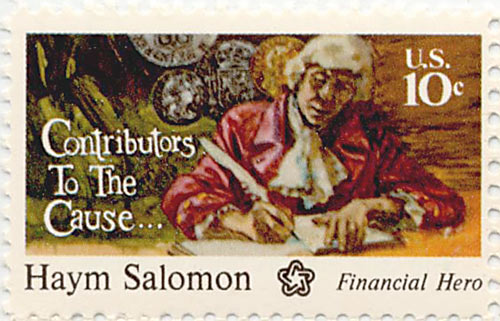
For generations we have been taught that a 1775 arrived Polish-born Jewish broker named Haym Salomon personally advanced roughly six hundred thousand dollars of his own money to finance the American Revolution. The story further claims he answered a personal call from Washington before Yorktown, died penniless because he gave everything he possessed, and that Robert Morris was merely the official who depended on him.
This is not history. It is stolen valor. The six-hundred-thousand-dollar personal contribution is a later invention, popularized in Madison C. Peters’s 1911 pamphlet Haym Salomon, the Financier of the Revolution and repeated until it entered every schoolbook in America. Max J. Kohler’s 1931 examination of the records and the later work of Morris U. Schappes established that Salomon sold bills of exchange issued by the Office of Finance for ordinary commissions and did NOT advance large sums of his own capital.
The co-opting of the Financier’s title is one instance of a larger erasure. When the founding generation is written out of its own achievements, the people who created the country are no longer recognized as its rightful owners. The Salomon story does that work in plain sight.
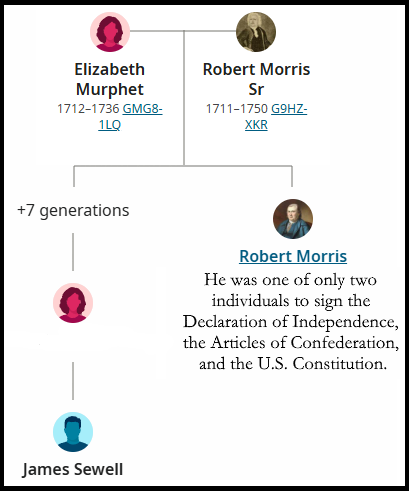
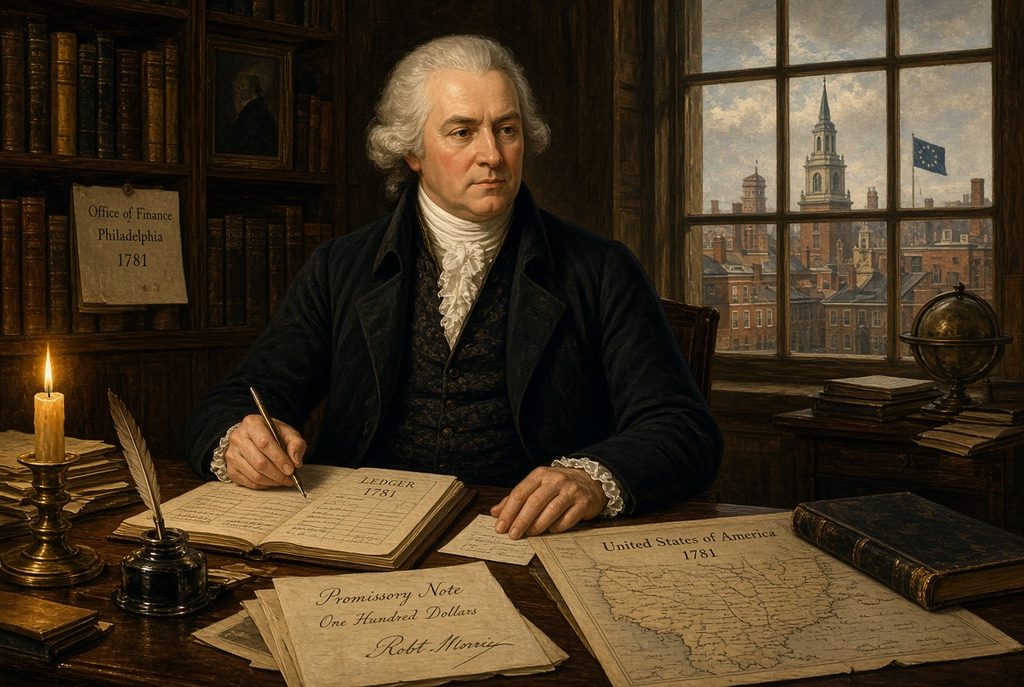
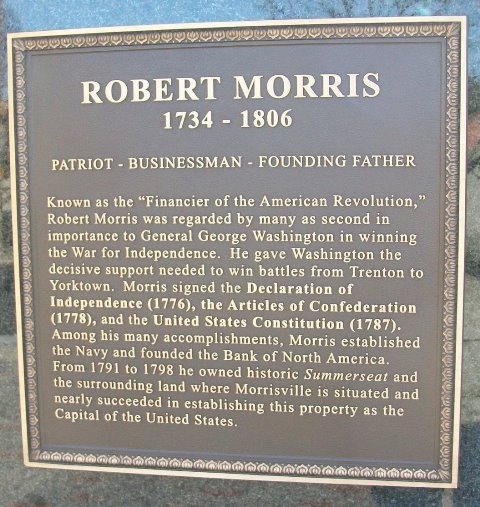
Robert Morris (1734–1806), my sixth great-uncle through his sister Margaret, is the man the contemporary record and every serious early history correctly call the Financier of the Revolution. He was one of the Founding Fathers of the United States. He served in the Pennsylvania legislature, the Second Continental Congress, and the United States Senate. He was one of only two individuals (along with Roger Sherman) to sign the Declaration of Independence, the Articles of Confederation, and the U.S. Constitution. From 1781 to 1784, he held the post of Superintendent of Finance of the United States, a role that earned him the title “Financier of the Revolution”. By the outbreak of the war he stood among the wealthiest merchants in the colonies, a self-made figure whose commercial credit was known on both sides of the Atlantic. When Congress appointed him Superintendent of Finance in 1781—the first national executive financial office—he confronted a government whose paper currency had collapsed and whose credit was exhausted. He issued “Morris notes,” promissory instruments backed by his personal fortune and commercial reputation when public credit was worthless. These notes became the working currency that paid troops, purchased provisions, and moved armies. He reformed contracting, imposed rigorous accounting, and simultaneously served as Agent of Marine, directing the Continental Navy. He founded the Bank of North America in 1781, the first congressionally chartered bank in the United States, capitalizing it in part with French specie and using it to stabilize operations. His 1781 Report on Public Credit laid the groundwork for the later funding system associated with Hamilton. Markers and statues still name him Patriot, Statesman, Financier. That title was earned in the war, not invented afterward.

For the Yorktown campaign Morris arranged water and land transport for hundreds of tons of ordnance and supplies, secured cattle, flour, and other provisions from multiple states, and pledged his private credit when congressional funds failed. He wrote that the movements of the army had so entirely drained him of money that he had been obliged to pledge his personal credit very deeply and to advance every shilling of his own. Contemporary estimates place the sum he raised or guaranteed on his own credit for that decisive movement well above one million dollars—roughly thirty million dollars in 2026 purchasing power. Judge Richard Peters later stated that the financial means furnished by Morris were the main-springs of transportation and supplies for the achievement that secured independence. Washington could not have marched to Yorktown without him. Morris put his own name, his commercial network, and his private fortune on the line when the public credit was gone. That is the record of the Financier of the Revolution.
Haym Salomon in Occupied New York: The Hessian Record, Not the Myth
Haym Salomon’s documented activities between 1775 and 1781 bear no resemblance to the later myth. After the British occupied New York in September 1776 he was arrested. Because he spoke German he was assigned as an interpreter and commissariat assistant to the Hessian mercenaries under General Leopold von Heister—the same forces Washington defeated after crossing the Delaware. That is the record: he served in an official capacity with the British-employed Hessian troops.
There is no primary wartime evidence—no American intelligence reports, no orders from Washington’s networks, no contemporaneous confirmation—that he operated as a double agent. The stories of mass desertions engineered by him, large-scale prisoner escapes, and sustained subversion from within appear only in later biographical reconstructions, including the 1911 Peters pamphlet and the popular accounts that followed. In occupied New York men were hanged for far less. The double-agent narrative is retrospective rehabilitation, not documented history.
Those reconstructions became useful only after the early-twentieth-century campaign to recast him as the private financier. When historian Morris U. Schappes analyzed the diaries of Robert Morris, the Superintendent of Finance from 1781 to 1784. Morris’s daily entries clarified that Salomon “did not himself lend money to the government and never claimed he did.”
He escaped to Philadelphia in August 1778. In his own memorial to Congress dated August 25, 1778, he stated that he had “most irrecoverably lost all his Effects and Credits to the amount of Five or six thousand Pounds Sterling” and that he had left his wife and infant child in New York “with empty hands.” He asked for employment so he could support himself and his family. Congress took no action. He did not arrive with capital sufficient to finance a nation. From 1781, after Morris became Superintendent of Finance, Salomon worked for Morris as a bill broker. He sold French and Dutch bills of exchange issued by the Office of Finance for ordinary commissions. Morris’s diary records the transactions. In 1781–1782 he handled roughly two hundred thousand dollars in such sales and was paid a broker’s fee. These were the services of a salesman and intermediary. They were not the personal pledging of a private fortune. Kohler’s 1931 study, drawing on the surviving papers and later corroborated by examination of the Morris diaries, confirmed he did not lend to the government and never claimed he had.
He died in Philadelphia on January 6, 1785. His estate consisted largely of depreciated government paper. His obituary described him only as “an eminent broker of this city” and made no mention of any personal financing of the Revolution. He was buried in the Mikveh Israel Cemetery. The gravesite remains unmarked; later memorial plaques were added, but the actual burial place was that of a man who died without the fortune the later story requires. We do not even know with certainty that any particular grave in Mikveh Israel Cemetery is Haym Salomon’s. Beginning in the late 1820s his son, Haym Moses Salomon, petitioned Congress for repayment of supposed large personal loans. Committees examined the records and rejected the claims. The inflated figure and the title itself took hold in the early twentieth century through Peters’s pamphlet and related memorial efforts that treated the large personal contribution as settled fact.
“Warner Brothers’ 1939 film “Sons of Liberty” continued the false story. In 1941, a Chicago monument and a Liberty ship further cemented his status as a financier. As late as 1975, a U.S. Postal Service stamp falsely labeled him a “Financial Hero” responsible for raising most of the money to finance the Revolution.“— The Patriot Broker: Deconstructing the Myth of Haym Salomon By Arnold Kaplan 2026
The Revolution was financed by the people who fought it, by domestic loans and wartime paper later restructured under Hamilton, by French and Dutch credit converted into usable funds, and above all by the personal credit, commercial network, and institutional authority of Robert Morris. A broker who sold government bills on commission after the war had turned, and who earlier had served in the Hessian commissariat, is not the Financier of the Revolution. The plaques, the statues, the contemporary title, the pre-1911 literature, and the surviving financial records name Robert Morris as the Financier. The six-hundred-thousand-dollar personal-loan story is stolen valor. It was manufactured and repeated in schoolbooks for decades to claim a Jewish financing of the Revolution and to diminish the Ethnic American founders who actually supplied the credit. The free white persons of good moral character named in the Naturalization Act of 1790 built the institutions, signed the documents, and put their own fortunes on the line. Their names and deeds were later displaced by a fabricated narrative that treats the builders as interchangeable with those who arrived afterward. The plaques still stand. The records still exist. Our history is not theirs to rewrite. It belongs to the people who made it.
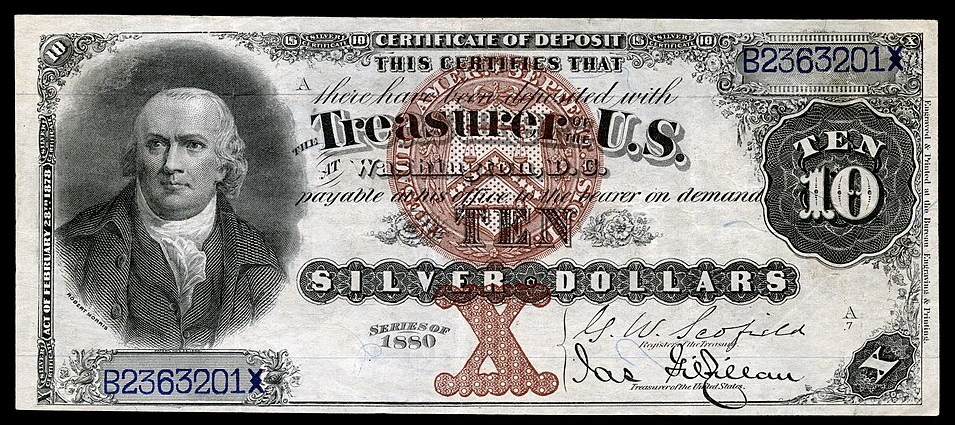
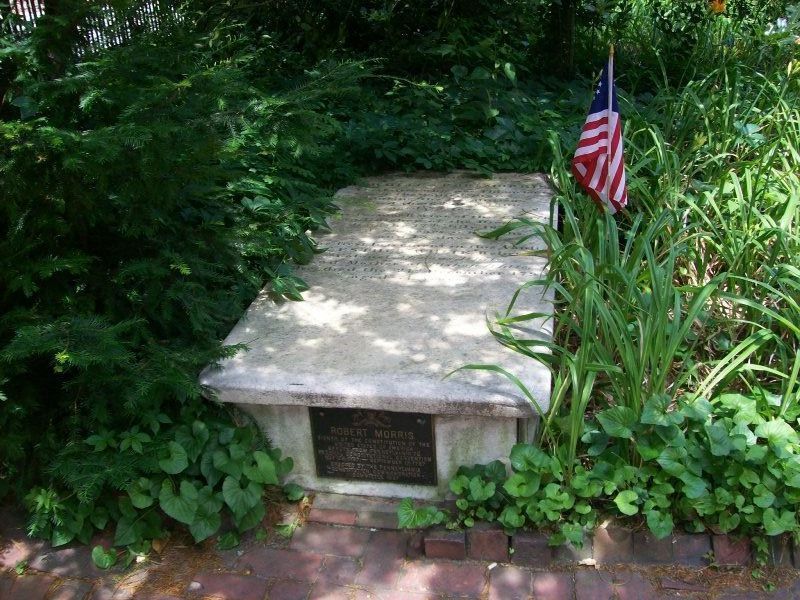
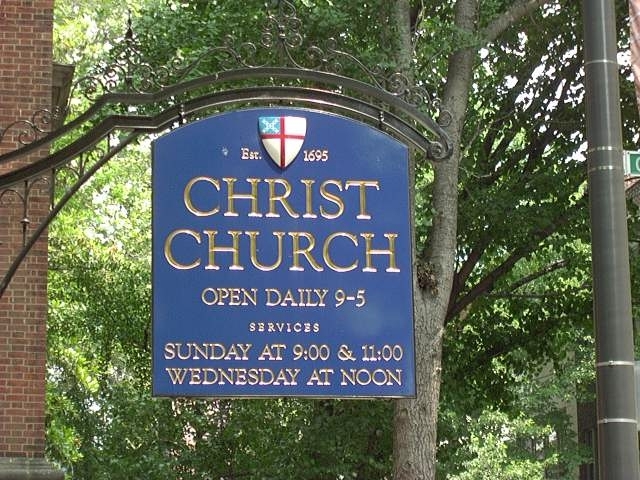
Christ Church (Episcopal)
Philadelphia
© James Sewell 2026 – All rights reserved
A Personal Note from James
I write this as a sixth great-nephew of Robert Morris through his sister Margaret. The title “Financier of the Revolution” was not given to him by later writers. It was the name his own generation used for the man who put his private credit on the line when the public credit was gone. Markers still stand that call him second only to Washington. Pre-1911 histories do not mention Haym Salomon as the financier. They name Robert Morris.
When I was taught the Salomon story in school, it was presented as settled fact: that a recent arrival had personally bankrolled the Revolution while the actual financier was reduced to a supporting role. That is not a small error. It is the deliberate substitution of one man’s brokerage commissions for another man’s fortune, signature, and institutional authority. It is stolen valor applied to the founding itself. It has been taught to millions of our children and it is fabricated history, in my opinion.
The same pattern appears across all of our history. The people named in the Naturalization Act of 1790 as free white persons of good moral character, the Posterity named in the Preamble, are written out of the achievements they produced. Later arrivals are placed at the center of the story as if they had been there all along. The plaques, the diaries, the financial records, and the contemporary title still name Robert Morris. Those records have not disappeared. They have simply been set aside in favor of a narrative that serves a different purpose and people.
I ask that Robert Morris be restored to the title his own generation gave him. And I ask that Ethnic Americans stop accepting the quiet removal of their own ancestors from the history of the country they built. The records are still there. The plaques still stand. The question is whether we will keep allowing them to be overwritten or torn down.
Pingback:The Ethnic American Library - Ethnic American