
Foreign Aid as Ethnic American Suicide
The Story So Far: A Nation Under Siege
Over the course of this series, I have carefully examined the many layers of displacement facing Ethnic Americans—those of European descent whose ancestors turned a wilderness into the greatest republic the world has ever known. I began with the foundational overview in Part I, laying out the scope of the crisis from the angle of small business displacement, where non-European groups have taken over industries like motels, gas stations, and trucking through immigration policies and government programs. From there, I dove into the stark demographic reality: in the 1960s, people of European heritage made up nearly 90% of the population. Today, projections show that by 2045, we will be a minority in the country our forebears built (Part II).
I have shown how our shared cultural heritage—the pioneer spirit, the values of hard work and self-reliance—has been steadily eroded and replaced by a fragmented, multicultural narrative that silences our story (Part III). I calculated the crushing economic burden: hundreds of billions of dollars every year diverted to support newcomers through welfare, healthcare, education, and housing (Part IV).
I exposed the political transformation, as imported voting blocs shift power away from the historic American core (Part V). I detailed the mechanisms that accelerate the process: anchor babies, chain migration, blue-collar labor importation, H-1B visas that displace American workers, and asylum policies exploited as loopholes (Part VI, Part VII, Part VIII, and Part IX).
I documented the rise of crime in communities that were once safe (Part X), the systematic indoctrination of our children in public schools (Part XI), the immigration-driven crime multiplier that terrorizes communities (Part XII), the fraudulent misuse of the 14th Amendment to grant birthright citizenship (Part XIII), and the ongoing spiritual assault that seeks to erase our Christian covenant (Part XIV).
Taken together, these installments paint a picture not of random decay, but of a deliberate, multi-decade conquest. And now, in this piece, I confront the financial engine that has powered much of it: foreign aid—the tribute paid by Ethnic Americans to subsidize the very forces displacing us. This is the hidden thread connecting the demographic shifts, economic burdens, and cultural erosions we’ve explored. It’s the story of how our own tax dollars have been weaponized against us, funding instability abroad that drives migration here, all while starving our communities of the resources they need to thrive.
The Turning Point: 1965 and the Opening of the Gates
The year 1965 stands as the great hinge of history for modern America. That was when Congress passed the Hart-Celler Immigration and Nationality Act (Hart-Celler Act), sold to the public by Senator Ted Kennedy and others as a minor reform that would not alter the nation’s ethnic composition. The promises were lies. By abolishing national-origin quotas that favored European immigration, Hart-Celler flung open the gates to mass migration from Asia, Africa, Latin America, and the Middle East.
Almost overnight, America was no longer the unified nation John Jay celebrated in the Federalist Papers—a people bound by common ancestry, language, religion, and principles (Part V). It became instead a vast social experiment in unlimited diversity, a place where no single group holds a lasting majority, and tribal competition replaces shared destiny. The act’s architects assured Congress that it would add only a few thousand immigrants annually. Instead, it unleashed a flood: from 250,000 legal immigrants per year in the 1950s to over 1 million today, not counting illegals.
Remarkably, in that same pivotal year, foreign aid began its transformation from a limited Cold War tool to a permanent, ever-expanding hemorrhage of American wealth. The timing was no accident. Hart-Celler did not merely permit mass immigration; it coincided with policies that actively subsidized the sources of that immigration. We pour billions into foreign nations, destabilize their societies through interference or failed development schemes, create the conditions that drive millions to flee, and then welcome those millions here as “refugees” or “asylum seekers.” This is not benevolence; it’s a closed loop designed to replace the founding stock.
Foreign aid is marketed as humanitarian benevolence. In truth, it functions as tribute—a crushing tax on working Ethnic Americans to bankroll globalist ambitions that directly undermine our own survival. Every dollar sent abroad is a dollar denied to securing our borders, revitalizing our factories, repairing our crumbling roads and bridges, or ensuring a brighter future for our children and grandchildren. It is taxation without representation on a planetary scale, echoing the grievances that sparked the American Revolution, but magnified a thousandfold. The Founders railed against a few pence; today, we pay trillions to prop up foreign regimes while our own people struggle.
To understand the scale, consider that pre-1965 aid was modest—around $4.5 billion annually in nominal terms, focused on Cold War allies. Post-Hart-Celler, it ballooned as America positioned itself as global policeman and benefactor. The act’s family reunification provisions ensured that aid-fueled migrants could sponsor endless chains of relatives, multiplying the demographic impact. This synergy between aid and immigration policy has been the regime’s most effective tool for engineering the Great Replacement.
What Foreign Aid Really Is—and the True Scale of the Cost
Foreign aid is vastly more expansive than the feel-good stories on evening news segments suggest. It encompasses not only overt USAID programs but also direct military financing, covert operations funneled through cutouts, massive contributions to multilateral organizations like the UN, World Bank, and IMF, and off-budget economic guarantees that become taxpayer liabilities when they inevitably fail. It’s a web of slush funds, black budgets, and backdoor deals that span the globe.
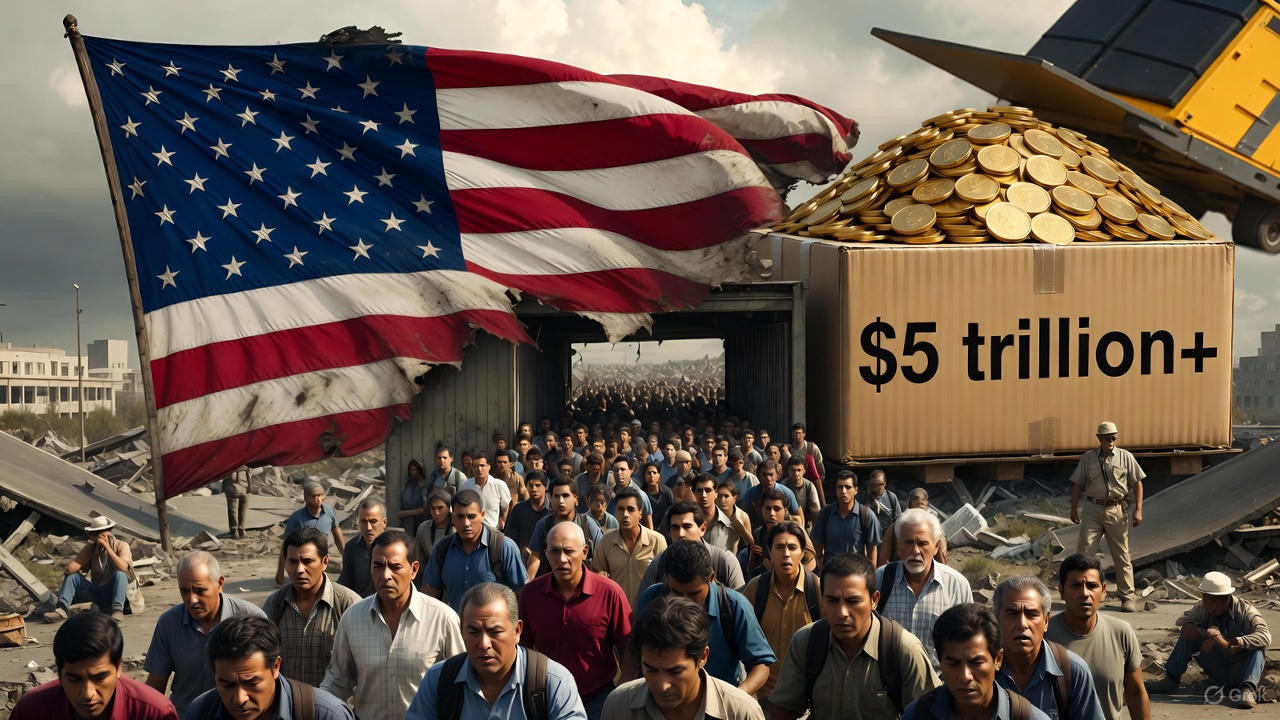
Since 1965, the cumulative total surpasses $5 trillion when adjusted for inflation and incorporating hidden and indirect costs. This estimate draws from Congressional Research Service reports, USAID historical data, declassified audits, and broader analyses of military and intelligence spending tied to foreign assistance. The money has touched more than 150 countries—essentially the entire globe. But this is a conservative figure; when including the full ripple effects like interest on related debt and off-books operations, some analysts put the true cost closer to $8–10 trillion.
In recent years, overt disbursements alone have ranged from $70 billion to $100 billion annually, according to sources like ForeignAssistance.gov and USAFacts. But these figures are only the visible tip. Hidden layers—including Department of Defense security cooperation, intelligence black budgets, and emergency drawdowns—push the effective annual total far higher. For example, the DoD’s “train-and-equip” programs run $50–60 billion yearly, often disguised as aid. CIA operations, revealed in leaks like the Church Committee reports, add $20–30 billion more, laundered through NGOs that promote “democracy” but often facilitate migration.
A substantial share is allocated to “peace and security,” which in practice means arming proxies and training foreign militaries—think billions to Ukrainian forces or Israeli defense systems. Another large portion goes to health and development initiatives that, intentionally or not, make emigration more feasible by improving basic infrastructure in source countries. The remainder funds economic “aid” packages that often enrich corrupt elites while doing little to stem the outflows that end up on our doorstep.
This creates a vicious, self-reinforcing cycle: American tax dollars fund instability or dependency abroad, generate waves of displaced people, and then we pay again—through welfare, schools, hospitals, and prisons—to absorb them. Meanwhile, our own heartland communities grapple with wage stagnation, overcrowded classrooms, emergency rooms bankrupted by uncompensated care, and infrastructure that crumbles while billions vanish overseas.
Even more insidious are the truly “lost monies”—the billions that disappear into shadows. Intelligence agencies have run black budgets totaling trillions since the Cold War, much laundered through NGOs that double as migration facilitators. War-related spending since 1965 exceeds $10 trillion when including Vietnam, Iraq, Afghanistan, and ongoing commitments, with interest on the resulting debt adding trillions more. Debt forgiveness programs have wiped out over $500 billion owed by developing nations, effectively turning loans into grants on the taxpayer’s tab. Export-Import Bank guarantees and Overseas Private Investment Corporation (now DFC) contingencies add hundreds of billions in potential liabilities, often triggered by the very instability our aid helps create.
The Growth of the Aid Empire Over Decades
The trajectory of foreign aid since 1965 divides into clear historical phases, each escalating the previous one and deepening our entanglement.
From 1965 to 1979, the Cold War drove explosive growth. Hundreds of billions (inflation-adjusted) flowed to strategic allies in Asia, Latin America, and the Middle East. Food shipments to India at times consumed a fifth of U.S. wheat production, while military aid propped up regimes across the developing world. This era set the template: aid as a tool for geopolitical influence, often at the expense of domestic priorities.
The 1980s and 1990s added another $1.2 trillion to the tally. The Reagan administration saw massive covert funding, including billions to Afghan mujahideen through the CIA’s largest-ever operation, Operation Cyclone. Multilateral institutions like the IMF received huge U.S. contributions for bailouts that stabilized failing economies just long enough to export their skilled workers to America. The end of the Cold War did not slow the flow; instead, aid pivoted to “democracy promotion” and economic liberalization, opening new markets for exploitation while creating new sources of migration.
The post-9/11 “War on Terror” era shattered all records. More than $1.5 trillion poured into Iraq, Afghanistan, and associated theaters, much labeled as “reconstruction” but producing little beyond corruption and resentment. Billions went to Pakistan even as it harbored America’s most wanted terrorists. This period normalized trillion-dollar commitments, blending aid with military spending in ways that blurred lines and evaded oversight.
The most recent surge has added yet another trillion-plus. As of late 2025, support for Ukraine alone exceeds $175 billion across all channels, turning a European conflict into America’s longest and costliest proxy war. Ongoing commitments through Israel and other partners continue unabated, with projections suggesting hundreds of billions more in the coming years if current policies persist. For instance, if Ukraine aid continues at reduced levels of $400 million annually as per recent defense bills, the total could still climb to $200 billion by 2030. Escalations in the Middle East or new hotspots could easily double that.
Throughout, enormous sums vanish into unaccountable channels: arms “loans” that are quietly forgiven, intelligence operations disguised as humanitarian work, off-budget guarantees that materialize as liabilities only when crises hit. The Africa-focused Power Africa initiative, for example, has channeled $50 billion since 2013, much through private partners with minimal transparency.
Who Receives the Money—and Why It Matters
The top recipients expose the regime’s true allegiances, often prioritizing foreign ethnic interests over our own.
Israel stands unmatched, having received approximately $310 billion (inflation-adjusted) since 1948—nearly all of it since the 1960s and almost entirely military in nature. This includes direct grants, advanced weapons systems, missile defense funding like Iron Dome, and indirect support through loan guarantees that allow borrowing at preferential rates. Since October 2023, an additional $21.7 billion has been approved for operations in Gaza and related theaters. The U.S. also provides intelligence sharing, joint exercises, and diplomatic protection—forms of aid that add billions more in effective value. While Israel’s borders are fortified with American technology and funds, our own southern border remains a sieve, and conflicts fueled by this entanglement generate refugee pressures that rebound here. Critics, including some in Congress, argue the true total is even higher when factoring in tax-exempt donations to Israeli causes and U.S. subsidies for joint ventures. As of 2025, with ongoing tensions in the region, annual commitments are locked in at $3.8 billion through 2028, but supplemental bills could push 2026 totals to $5–7 billion if escalations continue.
Ukraine has become the latest black hole, absorbing over $175 billion as of December 2025. This prolongs a grinding proxy war, displaces millions, and opens pathways for Slavic migrants to claim special status in America. Projections for 2026 suggest a slowdown to $400–500 million under current authorizations, but renewed Russian advances could trigger emergency funding spikes.
Africa has received an estimated $2.6 trillion since 1960 across all donors, with the United States as the largest single contributor through bilateral and multilateral channels. Much of this “development” aid builds roads, ports, and health systems that ultimately serve as launchpads for migration northward. Sub-Saharan programs alone have funneled $1 trillion+ in U.S. dollars since 1965, often through AFRICOM military initiatives disguised as aid.
Africa’s Aid Dependency: The U.S. Share in the Trillions
To grasp the scale of America’s role in Africa’s aid addiction, consider the chart below (sourced from World Bank data, circa 2020–2023): It maps net official development assistance (ODA) as a percentage of government expenditures across African nations, revealing shocking dependency levels—up to 90% in countries like Liberia and Somalia. The right panel shows annual inflows in millions, with many nations receiving $100–200 million, while the line graph tracks trends since 1960, peaking in the 1990s amid debt crises.
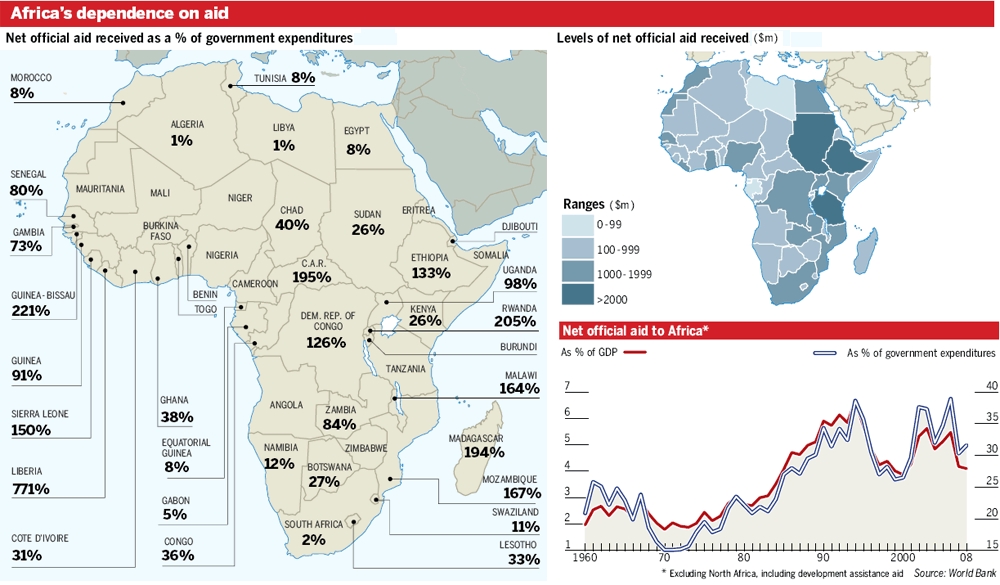
This visual underscores the trap: U.S. contributions total approximately $600 billion nominal since 1960 (per aggregated CRS and USAID data), or roughly $1.5–2 trillion when inflation-adjusted to 2025 dollars. As the top bilateral donor, America accounts for 20–30% of the $2.6 trillion global pot—billions funneled through USAID, PEPFAR (HIV/AIDS programs totaling $100 billion+ since 2003), and multilateral pledges to the World Bank. Yet, as the chart illustrates, this has bred dependency: aid now comprises 20–50% of budgets in 15+ countries, stifling self-reliance and fueling corruption. The result? Displaced millions from aid-propped instability flood migration routes—Somalia’s $20 billion U.S. total since 1965 birthed al-Shabaab and 100,000+ resettled Somalis in Minnesota alone, spiking crime in heartland enclaves (Part XII). Ethiopia’s $50 billion+ has displaced farmers via dam projects, funneling them to U.S. asylum claims. This isn’t help; it’s the grease on the wheels of our displacement.
Egypt and Jordan continue to receive billions annually as part of decades-old peace arrangements—essentially payments to maintain a fragile regional balance. Pakistan, despite repeated betrayal, has pocketed tens of billions.
These massive transfers do not merely disappear. They create long-term dependencies, spark or prolong conflicts, and construct the very infrastructure—airports, highways, clinics—that makes mass exodus possible. In the case of Israel, the aid not only funds military dominance but also enables policies that displace Palestinians, some of whom end up in U.S. resettlement programs via Jordan or Egypt—closing the loop on our own demographic shift.
Key Recipients: A Closer Look
The following list highlights some of the largest beneficiaries of U.S. foreign aid since 1965, with estimates adjusted for inflation and including hidden costs:
- Israel: Over $310 billion, predominantly military, with annual commitments projected at $3.8–5 billion through 2028 and potential supplements in 2026 if regional conflicts intensify.
- Egypt and Jordan: Tens of billions each year as “stability” payments tied to Camp David-era deals, totaling $150 billion+ combined since 1979.
- Ukraine: More than $175 billion in the last few years alone, with 2026 projections at $400 million base but potentially higher amid ongoing war.
- Afghanistan and Iraq: Trillions when including full war and reconstruction costs, with lingering commitments adding hundreds of millions annually.
- Pakistan: Tens of billions despite documented support for terrorist networks, including hidden intelligence slush funds.
Hidden Costs of Foreign Aid
Much of the true expense remains deliberately obscured, evading public scrutiny:
- Black intelligence budgets funneled through NGOs and cutouts, totaling trillions since the Cold War.
- Arms transfers recorded as “loans” but routinely forgiven, wiping out hundreds of billions in nominal debt.
- Off-budget guarantees and emergency drawdowns that bypass congressional oversight, often triggered by aid-fueled crises.
- Interest on war-related debt that compounds into trillions, with Vietnam-era borrowing still costing taxpayers today.
- U.S. contributions to multilateral bodies where funds are redirected without transparency, adding $1 trillion+ in indirect aid since 1965.
These “lost monies” represent the dark underbelly of empire—100s of billions vanishing into corruption, failed projects, and unaccountable programs that ultimately boomerang as migration pressures on our shores.
The Founders’ Clear Warning Against Entanglement
The Founders were unequivocal in their opposition to the kind of global entanglement we endure today, viewing it as a mortal threat to the young republic.
George Washington dedicated a substantial portion of his Farewell Address to warning against “permanent alliances” and “passionate attachments” to foreign powers. He predicted they would drain national wealth, foster domestic factions, and drag America into conflicts far removed from our true interests. “The great rule of conduct for us,” he wrote, “is to have as little political connection as possible with foreign nations.”
Thomas Jefferson, in his First Inaugural Address, articulated the ideal foreign policy: “peace, commerce, and honest friendship with all nations—entangling alliances with none.” He saw endless foreign commitments as a path to bankruptcy and loss of sovereignty.
Alexander Hamilton and James Madison, writing in the Federalist Papers, scorned subsidies to foreign governments as tools of degradation and potential slavery for a free republic. Hamilton in No. 11 called them “the certain instruments of national degradation,” while Madison in No. 41 mocked disproportionate outlays as folly.
The Monroe Doctrine crystallized this vision: America would avoid European quarrels, and Europe would stay out of the Western Hemisphere. Above all, they viewed the Constitution’s “general welfare” clause as a mandate to prioritize domestic needs, not to serve as global benefactor. Their writings brim with cautions against the very system we have today—endless tribute that enriches foreign elites while impoverishing our own people.
How We Abandoned the Founders’ Vision
America began straying from this path in the mid-20th century, but the 1960s marked the decisive break. The Foreign Assistance Act of 1961 created USAID as a permanent bureaucracy dedicated to global intervention. Kennedy’s Alliance for Progress flooded Latin America with billions, often serving as cover for covert regime-change operations that destabilized entire regions.
Later administrations accelerated the trend. Nixon concealed costs in Vietnam wind-downs, pouring billions into a lost cause. Carter cloaked funding for dictators in “human rights” rhetoric, breeding revolutions like Iran’s 1979 upheaval. Reagan’s covert wars created blowback that still haunts us, with mujahedeen aid birthing al-Qaeda. The post-9/11 era shattered all restraint, turning foreign aid into an instrument of endless war and nation-building fantasies whose failures produced millions of displaced people seeking refuge here.
Even periods of supposed restraint—like “America First” rhetoric—saw overt cuts offset by surges in hidden military and health spending. The COVID era alone added hundreds of billions in “global health” aid, much of which lured migrants with vaccine programs and economic incentives. As of 2025, with new conflicts looming in Asia and the Middle East, projections suggest aid could hit $200 billion annually by 2030 if unchecked.
The Direct Link to Our Displacement
The causal chain is clear and undeniable: foreign aid creates the very conditions that drive mass migration to our shores.
“Root cause” funding for Central America—billions upon billions—has not curbed violence or poverty; caravans have only increased in size and frequency, with over 2 million encounters annually at the southern border. Development aid to Africa constructs the very infrastructure—roads, airports, clinics—that facilitates mass movement toward the West, turning Sahel villages into staging grounds for trans-Saharan treks. Military entanglements in the Middle East and Ukraine generate refugee crises whose beneficiaries often receive priority resettlement in America, with TPS programs adding hundreds of thousands.
At home, the consequences are visceral: decades of wage stagnation for working-class Ethnic Americans, schools overwhelmed by non-English speakers, hospitals bankrupted by uncompensated care, veterans languishing on waitlists, and communities transformed beyond recognition. The opioid crisis ravaging Appalachia, the factory closures in the Rust Belt—these are not unrelated; they stem from resources diverted abroad while our own people are left to fend for themselves.
Stolen Opportunities: What $5 Trillion Could Have Meant for Ethnic Americans
Consider the alternative future that $5 trillion invested at home could have created for Ethnic American families and communities—a vision of renewal denied by the tribute system.
| Median-priced family homes | 12+ million | Enough new housing to shelter 50 million people, reviving dying industrial towns and preventing white flight to alien suburbs. This could have transformed places like Youngstown, Ohio, or Flint, Michigan, into thriving family havens. |
| Four-year college degrees (including room/board) | 40+ million | Debt-free higher education for multiple generations, arming our youth against foreign labor replacement and ideological capture in universities. Imagine millions more welders, engineers, and teachers from our stock, free from student debt bondage. |
| Years of median household income support | 60+ million | Long-term relief for struggling families, erasing opioid despair in Appalachia and the Rust Belt, funding incentives to reverse plummeting birth rates. This could have meant paid family leave, childcare subsidies, and community revitalization for tens of millions. |
| Miles of multi-layer border barrier | 200,000+ | Complete, redundant fortifications across the entire southern border many times over—ending illegal crossings permanently and saving billions in enforcement costs. |
| Fully equipped VA hospital beds | 2.5+ million | Universal, world-class healthcare for every post-1965 veteran and their families—no more waitlists while newcomers receive free services, honoring those who served with dignity. |
| Miles of highways and bridges repaired or built | 500,000+ | A modern, safe national network reconnecting deindustrialized heartlands and through preventing deadly infrastructure failures like the I-35W bridge collapse, boosting commerce and safety. |
| Annual child tax credits for native families | Trillions in direct support | A decade or more of meaningful incentives for 10–15 million children annually—boosting Ethnic American birth rates against invader multipliers and securing our demographic future. |
| Small business startup grants/loans | 10+ million | Seed capital for enterprises in every county, keeping wealth creation in our communities instead of flowing to immigrant enclaves, reversing the trends documented in Part I. |
This table represents not fantasy, but opportunity, stolen legacy denied to generations of Ethnic Americans in favor of foreign entanglements. The numbers are conservative; with interest savings from avoided debt, the impact could be even greater.
Dismantling the Common Excuses
Defenders of endless foreign aid trot out familiar justifications, none of which withstand scrutiny.
They claim it “buys influence” and prevents larger conflicts. Yet Pakistan pocketed tens of billions while sheltering Osama bin Laden, and Egypt accepts massive annual payments yet maintains ties with America’s adversaries. Much “humanitarian” spending creates long-term dependency or enriches corrupt regimes, ultimately driving more migration as conditions fail to improve.
Critics dismiss concerns by noting that overt aid is “only 1% of the budget.” This is deliberate deception—the effective total, including hidden military and intelligence channels, is several times higher. When interest on war-related debt is added, the burden becomes crushing, with post-1965 conflicts alone generating trillions in long-term costs.
Opponents are labeled “isolationists.” But the Founders were no isolationists—they championed free trade and honest diplomacy. They simply rejected perpetual tribute and entangling alliances that serve foreign interests at our expense. Cutting aid would not mean withdrawing from the world; it would mean engaging on our terms, without the chains of dependency.
The Path Forward: Reclaiming What Is Ours
Prioritizing our own people is not hatred or bigotry. It is the fundamental obligation of any legitimate government, as the Founders intended.
The Preamble to the Constitution speaks of securing blessings for “ourselves and our Posterity”—not for the entire planet or foreign ethnic groups.
We stand at a historic crossroads. Ending the tribute would liberate immense resources to seal our borders, revitalize manufacturing, repair our infrastructure, honor our veterans, and encourage the families needed to secure our future. Practical steps include repealing Hart-Celler, sunsetting multilateral commitments, auditing black budgets, and redirecting funds to domestic priorities like those in the table above.
This series has documented a comprehensive siege: cultural erasure, economic extraction, political subversion, legal subversion, demographic replacement. Foreign aid is the financial lifeblood that sustains it all—looting the treasury to open the gates and fund the invasion.
But the story need not end in defeat. The same divine Providence that guided our ancestors across oceans and through trials has not forsaken us. With will and unity, we can break the cycle.
Let the tribute cease. Let the republic be restored to those for whom it was intended.
In Closing
The trillions dispatched to Israel, Africa, Ukraine, and countless other destinations—from overt billions to shadowy trillions—stand as irrefutable evidence: this republic was forged by Ethnic Americans, for Ethnic Americans and their descendants.
The $5 trillion-plus extracted since 1965 could have built a fortress of prosperity and security at home. Instead, it bankrolled our own displacement.
The economic siege represents the final link in the chain binding us. But the God who tempered our steel and guided our rise remains sovereign over history.
Rise, Ethnic Americans. Reclaim what is yours. Pass the unbroken fire to those who come after.
Thank you for standing with me through this series.
James Sewell
TL;DR: The Bottom Line on Foreign Aid as Displacement
Since the 1965 Hart-Celler Act opened the floodgates to non-European migration, America has shipped $5 trillion+ (adjusted, including hidden costs) overseas—to 150+ countries. This tribute funds instability abroad, then imports the human fallout: migrants from Africa, Ukraine, Latin America, the Middle East. Top recipients? Israel ($310B+ adjusted), Ukraine ($175B+ as of 2025), Africa ($2.6T from all donors since 1960, U.S. major share). That money could have built millions more homes, degrees, and border walls—for Ethnic Americans. Instead, it subsidizes our replacement while our infrastructure crumbles and veterans wait. The Founders warned against entangling alliances; today, it’s treason against posterity. Cut the tribute. Rise.
© James Sewell 2025 – All rights reserved
Pingback:The Ethnic American Library - Ethnic American
Pingback:The Great American Displacement: Part XXIII: (Taxation’s Tyranny) - Ethnic American