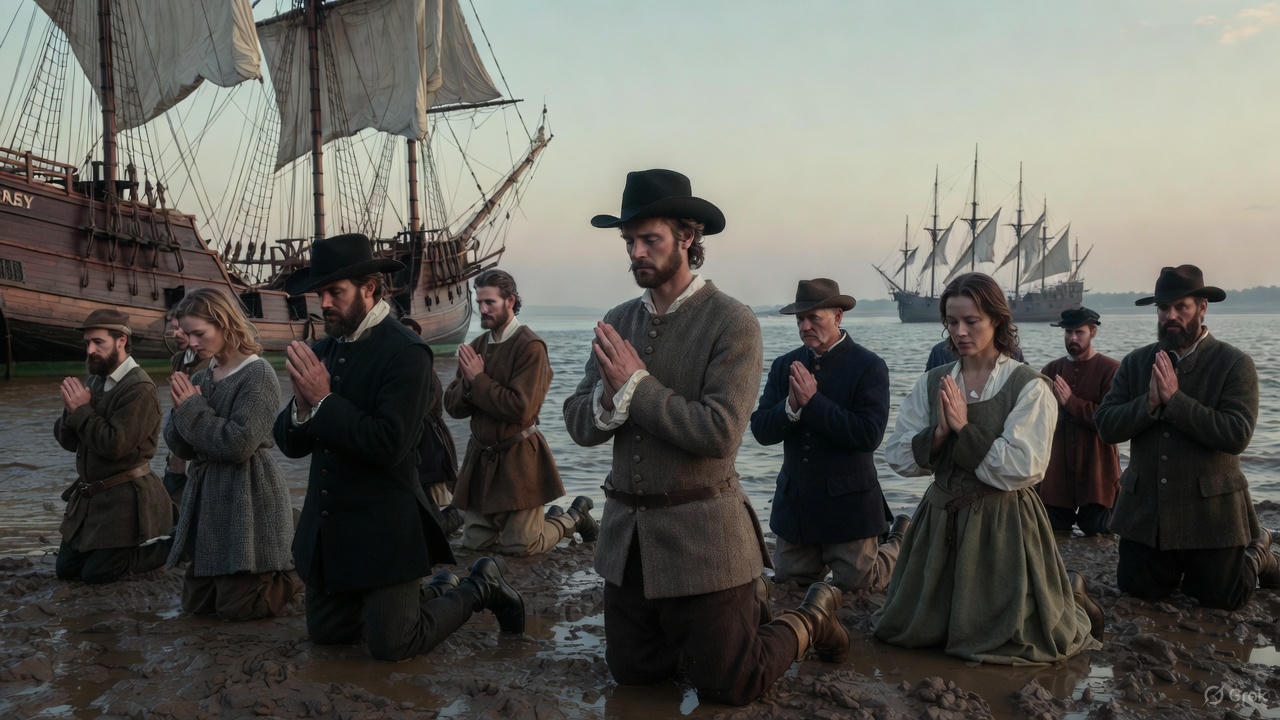
A Personal Stake in Our Covenant
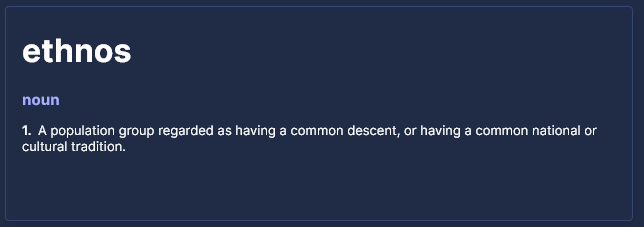
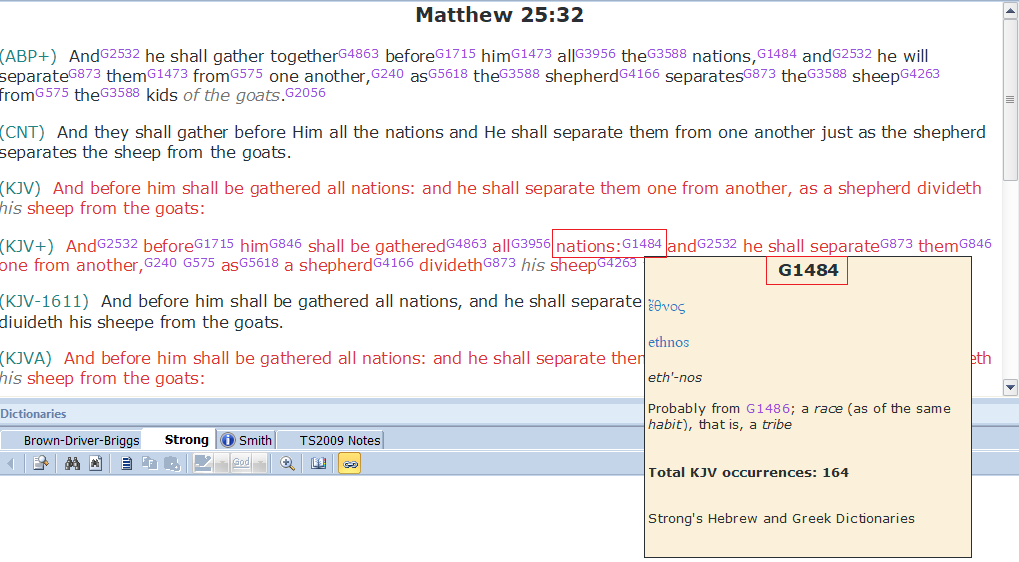
In the preceding installments of this series, I’ve meticulously charted the systematic erosion of Ethnic American identity—the direct descendants of the European pioneers who forged this nation from untamed wilderness, through blood, sweat, and unyielding resolve. From the fraudulent application of the 14th Amendment to enable stolen citizenship, to the crime-multiplying effects of mass migration that transform quiet neighborhoods into alien enclaves, I’ve exposed how immigration serves as a weapon of conquest. Chain migration turns one entrant into a forest of relatives; anchor babies grant voting rights to those with no claim to our heritage; H-1B visas prioritize foreign workers over our own; and endless grifts hollow out the republic built by our ancestors.
I write this not as a detached observer, but as a direct descendant of the officer of the deck aboard the De La Warr’s vanguard ship in 1610—my forefather whose watch and seamanship brought Lord De La Warr’s (from where we get the name Delaware) relief fleet up the James River at the exact moment the last starving survivors of Jamestown were sailing away to abandon the colony forever. On June 8, 1610, his vigilance turned defeat into deliverance. The chroniclers of that day called it the hand of Almighty God; I call it the first link in the chain of divine providence that carried a Christian people to these shores and bound them into one nation under one faith. That covenant is now under assault, and the displacement we face is not merely demographic—it is spiritual, cultural, and existential, aimed at figuratively and literally extinguishing the English, Welsh, German, Swedish, French Huguenot, Dutch, Scottish, Irish, and broader European Ethnic American lineage that defined America’s founding ethos.
This assault isn’t just demographic or economic—it’s spiritual, a calculated war on the Christian soul of America. The elites in their ivory towers insist we were never a Christian nation. They peddle the myth of a purely secular founding, with deistic Fathers crafting a godless Constitution for a pluralistic dream. This is a brazen lie, engineered to uproot our sacred foundations and justify the overwhelming tide of alien religions now engulfing us. To crush this narrative, we’ll unearth the unvarnished truth from primary sources—and we’ll do it with receipts that no academic sophist can dismiss
This assault isn’t just demographic or economic—it’s spiritual, a calculated war on the Christian soul of America. The elites in their ivory towers—those self-appointed guardians of “diversity” who flood our heartland with incompatible faiths—insist we were never a Christian nation. They peddle the myth of a purely secular founding, with deistic Fathers crafting a godless Constitution for a pluralistic dream. This is a brazen lie, engineered to uproot our sacred foundations and justify the overwhelming tide of alien religions now engulfing us.
Picture it: mosques sprouting like weeds in once-quiet Midwestern towns, their minarets piercing the sky where church steeples once stood unchallenged; Hindu temples rising in suburban sprawl, their gilded idols mocking the crosses that marked our pioneers’ graves; Shinto shrines tucked into Texas backlots, complete with torii gates and monkey statues that would have horrified our forefathers as pagan abominations. And it’s not abstract—it’s overwhelming.
In Minnesota alone, Somali Muslim enclaves now dominate entire cities, with calls to prayer echoing over streets our grandparents walked to Sunday services. Dearborn, Michigan, feels more like a caliphate than an American suburb, with halal markets outnumbering diners and Sharia patrols in some neighborhoods. New York’s boroughs brim with Sikh gurdwaras and Buddhist viharas, while California’s Silicon Valley and the Whitehouse host Diwali festivals that eclipse Christmas lights. This isn’t enrichment; it’s conquest, a spiritual displacement that drowns the Christian hymns of our Ethnic American forbearers in a cacophony of foreign chants, eroding our identity at its core.
To crush this narrative, we’ll unearth the unvarnished truth from primary sources: the Federalist Papers, Elliot’s Debates on the Adoption of the Federal Constitution, the original state constitutions at ratification, voter and officeholder oaths, and more. We’ll dismantle the tired tropes head-on, arming you with ironclad receipts against the inevitable backlash from academia’s gatekeepers. And we’ll reclaim the true meaning of “freedom of religion”—not a license for every global creed to overrun us, but liberty among Christians for the posterity of those who built this land. If any thread frays, we’ll weave it tighter in favor of Ethnic American truth: Our nation was forged by Christian Europeans for their Christian heirs, and its survival demands we honor that covenant against the demons of dilution.
To further illustrate the Founders’ intent, consider explicitly Elliot’s Debates—formally titled The Debates in the Several State Conventions on the Adoption of the Federal Constitution, a 2,500 page, five-volume collection compiled by Jonathan Elliot between 1827 and 1830. This invaluable resource documents the verbatim discussions from the state ratification conventions in 1787–1788, capturing the raw debates over the proposed Constitution. These records reveal not just procedural arguments but the cultural and religious assumptions of the era, showing how the Founders envisioned a Christian nation where non-Christians were effectively barred from power, even without explicit federal tests.
In the North Carolina convention, for instance, delegates explicitly addressed fears about Article VI’s ban on religious tests opening doors to non-Christians. Anti-Federalist Henry Abbot warned: “The exclusion of religious tests is by many thought dangerous and impolitic. They suppose that if there be no religious test required, pagans, deists, and Mahometans [Muslims] might obtain offices among us” (Elliot’s Debates, Vol. 4, p. 192). Federalist Governor Samuel Johnston reassured: “Those who are Mahometans, or any others who are not professors of the Christian religion, can never be elected to the office of President or other high office, [unless] first the people of America lay aside the Christian religion altogether” (Vol. 4, p. 215). James Iredell (future Supreme Court Justice) added: “It is never to be supposed that the people of America will trust their dearest rights to persons who have no religion at all, or a religion materially different from our own” (Vol. 4, p. 194). These statements confirm that Muslims and pagans were not welcomed; the Christian majority was expected to act as a de facto barrier, preserving the nation’s Protestant ethos without needing formal laws.
Defining “We the People”: John Jay and the Federalist Papers
The Constitution opens with the majestic words: “We the People of the United States, in Order to form a more perfect Union…” But who exactly are these “People”? The answer lies not in modern reinterpretations but in the founding documents themselves.
Enter the Federalist Papers—a series of 85 essays penned under the pseudonym “Publius” by John Jay (The 1st Supreme Court Chief Justice), Alexander Hamilton (Washington’s Chief of Staff), and James Madison (the Father of the Constitution), and published in New York newspapers between 1787 and 1788. These weren’t dry treatises; they were a passionate advocacy campaign, written to persuade skeptical Americans—especially in key states like New York—to ratify the newly proposed U.S. Constitution at the 1787 Philadelphia Convention. The Articles of Confederation had left the young nation teetering on collapse: weak central government, rampant interstate squabbles, no power to tax or regulate trade. The Constitution offered a bold fix—a stronger federal union while preserving state sovereignty—but ratification required nine states’ approval, and doubters feared it would devour liberty.
In these essays, Publius unpacked the Constitution’s mechanics, its safeguards against tyranny, and—crucially—its vision of unity. They explained the Preamble’s “We the People” not as a vague abstraction but as a deliberate affirmation of a singular, cohesive nation: one descended from shared ancestors, bound by language, faith, and principles.
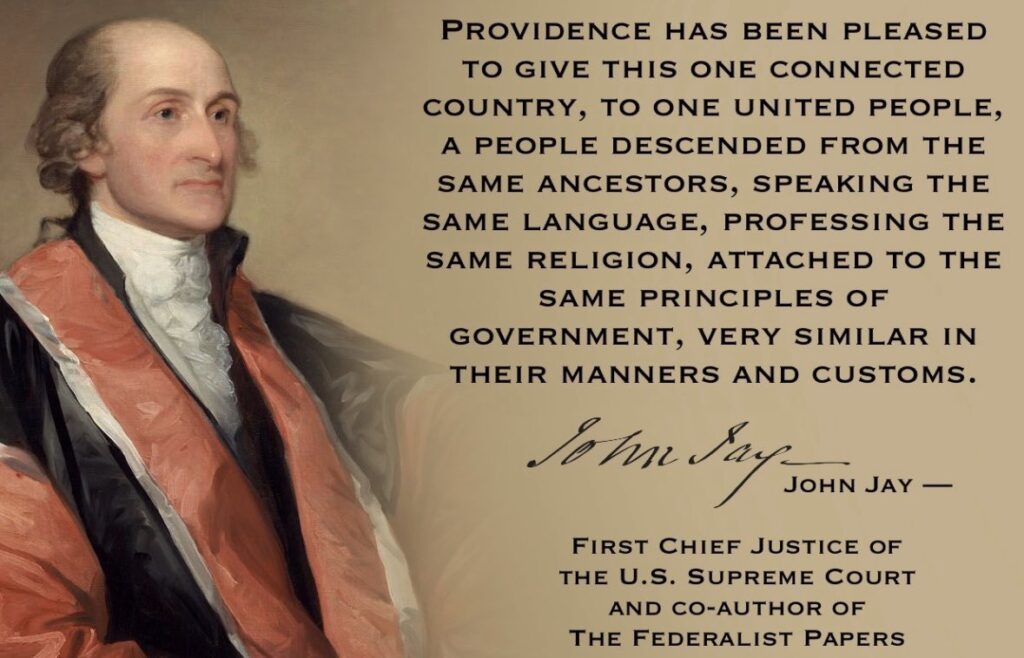
John Jay, the first Chief Justice and a devout Episcopalian, nailed it in Federalist No. 2: “With equal pleasure I have as often taken notice that Providence has been pleased to give this one connected country to one united people—a people descended from the same ancestors, speaking the same language, professing the same religion, attached to the same principles of government, very similar in their manners and customs…”That “same religion”? In 1787 America—98% were Christian—it meant Christianity. Jay’s invocation of “Providence” wasn’t casual; it echoed the biblical God who guided the Israelites, underscoring a divine mandate for Christian unity.
This Christian thread weaves through the Papers. Madison, in Federalist No. 37, credits the Convention’s success to “that great Being who created the universe” and likens delegates to Moses on Sinai! Hamilton, in No. 1, warns of disunion’s perils with Old Testament gravity.
Jonathan Elliot’s Debates in the Several State Conventions on the Adoption of the Federal Constitution—a four-volume treasure trove compiled in the 1820s from ratification transcripts—confirms this. These records capture the raw debates in state assemblies from 1787 to 1788, where delegates hashed out ratification. Religion saturates them. In Massachusetts, delegates fretted over Article VI’s no-religious-test clause (more on that later), insisting state-level Christian safeguards would endure. Virginia’s James Madison defended the Constitution as harmonious with “the principles of the Christian religion”. North Carolina’s speakers invoked “the blessing of Almighty God” no fewer than a dozen times, tying ratification to divine favor, as do I! These weren’t fringe voices; they represented the Christian consensus that the federal charter presupposed a godly republic.
Why leave explicit Christian verbiage to the states? Good Question. The Answer is Federalism.
The Founders designed a limited national government, reserving “police powers”—including education, morals, and religion—to the states as laboratories of democracy. As Madison argued in Federalist No. 45, the Constitution delegated few powers upward, leaving states to govern local life, including enforcing Christian norms through their charters. This wasn’t evasion; it was pragmatism—avoiding federal favoritism of one Christian denomination while letting states like Congregationalist Connecticut or Anglican Virginia embed their faith.
The Secularists will howl: “The Founders were deists!” Some, like Jefferson, trimmed miracles from his Bible. But even he echoed Christian natural law—the divine moral order imprinted on human reason, first articulated by St. Augustine in City of God (eternal law reflected in nature) and systematized by St. Thomas Aquinas in Summa Theologica (natural law as participation in God’s eternal law, binding all conscience). Enlightenment thinkers didn’t push back; they built on it, even John Locke! Jefferson’s “Nature’s God” in the Declaration? Straight from Aquinas’s playbook—reason revealing The Creator’s law. Benjamin Franklin, often tagged as a deist, pushed Bible-based moral education. And the signers? Over half orthodox Christians: Episcopalians, Presbyterians, Congregationalists. Deism was a elite whisper amid the Christian roar of the people they served.
Christianity in the State Constitutions at Ratification
The federal Constitution’s silence on religion? Deliberate deference to states, whose constitutions at ratification (1787-1790) blared Christianity from every page. These documents—crafted post-Declaration, pre-ratification—weren’t suggestions; they were the binding law of the land, defining citizenship, office, and society for “We the People.” Eleven of thirteen embedded explicit Christian requirements for office, oaths affirming God and Scripture, or Protestant establishments.”
Here’s the ledger, state by state, with verbatim proofs:
- Connecticut (Fundamental Orders of 1639, operative 1787): Congregational Church established; officeholders swore oaths “in the name of the Ever-Living God” to uphold Gospel truths. Church membership gated civic roles (Connecticut Orders).
- Delaware (1776): Officeholders professed “faith in God the Father, and in Jesus Christ His only Son, and in the Holy Ghost, one God, blessed for evermore; and I do acknowledge the holy scriptures… to be given by divine inspiration” (Delaware 1776).
- Georgia (1777): Legislators “of the Protestant religion”; governor vowed Christian fidelity Georgia 1777.
- Maryland (1776): “All persons, professing the Christian religion, are equally entitled to protection”; oaths affirmed Christian belief (Maryland 1776).
- Massachusetts (1780): Officials declared “I, A.B., do believe the Christian religion, and have a firm persuasion of its truth”; taxes funded Protestant ministry; Sabbath laws enforced (Massachusetts 1780).
- New Hampshire (1784): Lawmakers “of the Protestant religion”; executive swore to Christian morals (New Hampshire 1784).
- New Jersey (1776): Officials Protestant, oaths “in the presence of Almighty God” (New Jersey 1776).
- New York (1777): No formal test, but disqualified clergy to balance church-state; Christian norms assumed, with protections for “religious opinion” (New York 1777).
- North Carolina (1776): Barred from office any who “deny the being of God or the truth of the Protestant religion, or the divine authority… of the Old or New Testaments” (North Carolina 1776).
- Pennsylvania (1776): Assembly affirmed “one God, the creator… and acknowledge the Scriptures… given by Divine inspiration” (Pennsylvania 1776).
- Rhode Island (1663 Charter, operative): No test—founded by Baptist Roger Williams for Christian dissenters fleeing persecution. Yet its charter opened “in the name of… our Lord Jesus Christ,” and laws protected Christian worship exclusively (Rhode Island Charter). By 1787, 99% of residents were Protestant Christians; town meetings began with prayer, schools taught from the King James Bible, in a culture where atheism was considered criminal, non-Christians were barred from citizenship, and daily life was infused with faith through revivals, days of fasting, and oaths sworn on the Bible. Rhode Island was under the 1663 Royal Charter until 1842, it’s Royal Charter says, “in the name of… our Lord Jesus Christ,” and it’s laws protected Christian worship exclusively.
- South Carolina (1778): “Christian Protestant religion… the established religion”; officials Protestant (South Carolina 1778).
- Virginia (1776): Jefferson’s Virginia Statute for Religious Freedom (1777) clearly states, “the holy author of our religion, who being Lord”, and The Virginia Declaration of Rights (1776) says “it is the mutual duty of all to practice Christian forbearance, love, and charity toward each other.”! Anglicanism was disestablished, yet there was a 95% Anglican/Episcopalian populace; laws mandated Christian morals, banned blasphemy, in a culture where atheism was considered criminal, non-Christians were barred from citizenship, and daily life was infused with faith through revivals, days of fasting, and oaths sworn on the Bible (Virginia 1776).
Positive tests: All 13, with 11 explicit (Connecticut through South Carolina, including New York’s implicit). Rhode Island and Virginia? Their “tolerance” was Christian-to-Christian.
Critics will bleat: “The federal Constitution superseded these!” Nonsense. Article VI, Clause 3—the “no religious Test” provision—banned such oaths only for federal offices, explicitly preserving state authority: “but no religious Test shall ever be required as a Qualification to any Office or public Trust under the United States“. States kept establishments—Massachusetts taxed for churches until 1833, Connecticut until 1818. Disestablishment was designed to curb federal meddling in rivalries among Christian denominations, such as between Baptists and Anglicans, rather than serving as an invitation for pagans or non-Christians. States evolved voluntarily, but the founding era? Unabashedly Christian.
Voter Oaths and the Supremacy of Christianity
Office wasn’t the only gate; in many states, voting—the people’s voice—hinged on Christian oaths, ensuring the electorate mirrored the nation’s soul. These weren’t relics; they were active in 1787-1790, tying ballots to faith for moral accountability. God-fearers wouldn’t betray the republic; oath-breakers risked eternal fire.
Examples abound, illustrating how Christianity’s supremacy was woven into the very act of civic participation:
- Delaware: Voters swore the Trinitarian oath, affirming Christ as God and Scriptures’ divinity Delaware Oaths.
- Maryland: Election oaths professed Christianity; non-believers disqualified Maryland Oaths.
- Massachusetts: Protestant affiliation required for some polls; oaths invoked “the Holy Trinity” Massachusetts Oaths.
- New Hampshire: Similar Protestant voter tests New Hampshire Oaths.
- Pennsylvania: Oaths for freemen affirmed “one God… and the Scriptures… by Divine inspiration” Pennsylvania Oaths.
While not every state imposed voter tests—often focusing instead on officials—these oaths bound civic duty to Christ: “I abjure allegiance to foreign powers… and profess faith in Jesus Christ as the Son of God”. Revolutionary loyalty oaths renounced the King, affirmed “Almighty God,” and effectively weeded out non-Christians, as Quaker pacifists discovered to their detriment. This Christian filter preserved spiritual integrity: The voters who ratified the Constitution and elected the First Congress were oath-bound believers, ensuring that the nation’s governance remained rooted in faith. There are no gaps in this system—it formed a cohesive fortress of Christian supremacy, ratified by the very people it was designed to protect.
Dismantling the Tropes: The Treaty of Tripoli and Other Fabrications
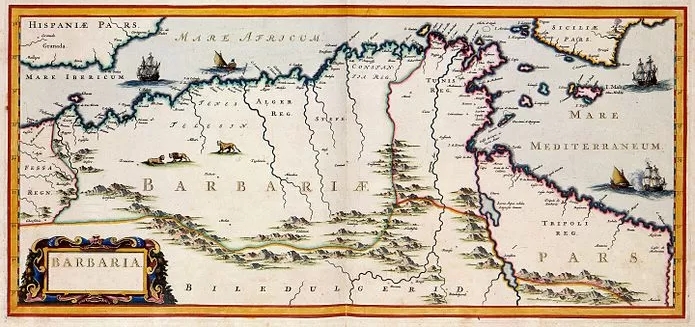
The secularists’ silver bullet? Article 11 of the 1797 Treaty of Tripoli: “As the Government of the United States of America is not, in any sense, founded on the Christian religion…”. Brandished like gospel, it’s anything but. Signed by Federalist President John Adams to halt Barbary pirates’ raids on U.S. ships, the treaty was drafted in Arabic for Tripoli’s pasha.
Enter Joel Barlow, U.S. Consul in Algiers—a Revolutionary War chaplain turned diplomat, freethinker, and poet who aided Thomas Paine’s Age of Reason but never pastored a flock. Barlow translated it to English, inserting Article 11—absent from the original Arabic ; look for yourself. Where Article 11 should be? A rambling letter from the Dey of Algiers (Tripoli’s overlord, Yusuf Karamanli’s suzerain) flattering Adams—irrelevant boilerplate . See for yourself: The 1930 State Department analysis confirms it; Arabic scans show the mismatch. Barlow likely added it as diplomatic grease—assuring Muslims no “Christian” crusade—mirroring similar fluff in treaties with Tunis and Morocco. The Senate ratified unread (standard then), but the 1805 renewal? Article 11 mysteriously had vanished. This isn’t a founding doctrine; it’s a translator’s sleight-of-hand in a pirate payoff. Slam dunk? Try a forgery exposed, crumbling the secular myth.
Other lies? Let’s eviscerate them, receipt by receipt, to leave no room for doubt:
- Jefferson’s “Wall of Separation”: His 1802 letter to Connecticut’s Danbury Baptists coined the phrase to assure no federal establishment trampling state churches—yet he greenlit Marine Band hymns at Capitol services, donated to Baptist missions, and pushed Bibles to Native tribes for “civilizing” via Christian morals (Danbury Letter, Bible Funding). The “wall”? A shield for state Christian liberty, not a barrier to faith.
- The often-misquoted phrase “separation of church and state” further underscores this Christian focus. Coined by Thomas Jefferson in his 1802 letter to the Danbury Baptist Association, it refers to “building a wall of separation between Church & State.” Note the word “Church”—it specifically denotes organized Christian institutions, particularly Protestant denominations like the Baptists, who feared state interference in their affairs. In the founding era, “church” did not encompass mosques, pagan temples, or Hindu temples or any other form of non-Christian places of Worship. The concept arose from solely intra-Christian tensions, such as protecting dissenting sects (Baptists, Quakers) from established Anglican or Congregational churches, not promoting pluralism for Muslims, pagans, or other non-Christians.
- Jefferson’s “wall” was meant to safeguard religious liberty within a Christian framework, preventing federal overreach into state-level Christian establishments. As the Danbury letter context shows, it addressed Baptist concerns about Congregational dominance in Connecticut—not inviting foreign religions. This aligns with the broader founding vision: America was for various forms of Christianity, with “separation” ensuring no single sect dominated federally, while states maintained Christian oaths and norms.
- No God in the Constitution: Intentional, to dodge denominational scraps (Presbyterian vs. Methodist), but it ends “done… in the Year of our Lord Christ,” dates by Anno Domini, and swears officers on the Bible. Madison’s notes: God implied throughout.
- Founders’ Deism Overstated: Washington knelt in snow at Valley Forge, per eyewitnesses, beseeching “Providence” for victory—corroborated by aides like Isaac Potts. Adams proclaimed fast days invoking “the great Governor of the World” and Christ’s atonement: “Humbled… before the God of Heaven… for Jesus’ sake”. Deists? In private, perhaps—but public men of Christian virtue.
“Historians agree it’s secular!” Which historians? The multicultural mandarins citing each other in echo chambers. Primary sources—the Papers, Debates, State Constitutions—scream otherwise. Trust ink over inklings.
The True Meaning of “Freedom of Religion”
The First Amendment’s jewel: “Congress shall make no law respecting an establishment of religion, or prohibiting the free exercise thereof…” This guarded Christian sects from federal overreach—Baptists from Anglican taxes, Methodists from Presbyterian edicts. Madison’s Notes in the Federalist Papers protected “the rights of conscience” in a Christian context. No forefather dreamed of monkey god Statues or mosque-dotted skylines.
Let’s seal it: The 1790 Naturalization Act demanded eligibility for “free white persons” of “good character,” residency, and oaths—code for European Christians, excluding Africans, Asians, Natives. From Ethnic American eyes: Our gates were and are for kin, not conquest.
On September 17, 1787, members of the Constitutional Convention signed the final draft of the US Constitution and agreed to distribute the proposed constitution to the states. Each state then held its own ratifying convention to approve or disapprove the new constitution. Elliot’s Debates collects the documents pertinent to the discussions on ratification and spans over 2,500 pages.
In Elliot’s debates it states:
- In the North Carolina convention, delegates explicitly said the “no religious test” clause was only to prevent fights between Christian denominations, not to open the door to “Mahometans” or “Pagans.”
- Massachusetts and New Hampshire debates contain the exact same assurances.
Freedom of religion never meant a certain Christian Sect or any other religion than Christianity, as per the very words of the founding fathers.
Yes, delegates directly raised concerns about “Mahometans” and “pagans”, during the Constitutional Debates!
Foreseeing the Backlash: Reclaiming Our Christian Birthright
The demons will rage—”Theocracy!”—smearing reclamation as hate. But this is patriotism: Honoring the faith that fueled Jamestown’s hearths and Valley Forge’s fires. “Diversity strengthens”? Tell that to the crime waves and cultural voids from Parts XI-XIII. This spiritual siege ties the series: Deny Christianity, invite the flood; the flood drowns our European Ethnic American essence—figuratively in lost heritage, spiritually in forgotten altars, literally in replaced wombs.
We stand at the precipice of a New Declaration of Ethnic American Rights, one that boldly reaffirms Christianity as the unbreakable bond of our people, while fortifying borders to safeguard that sacred inheritance for generations yet unborn. This is our fight, our faith, our future. Rise, Ethnic Americans—reclaim the cross that crowned our conquest of the wild.
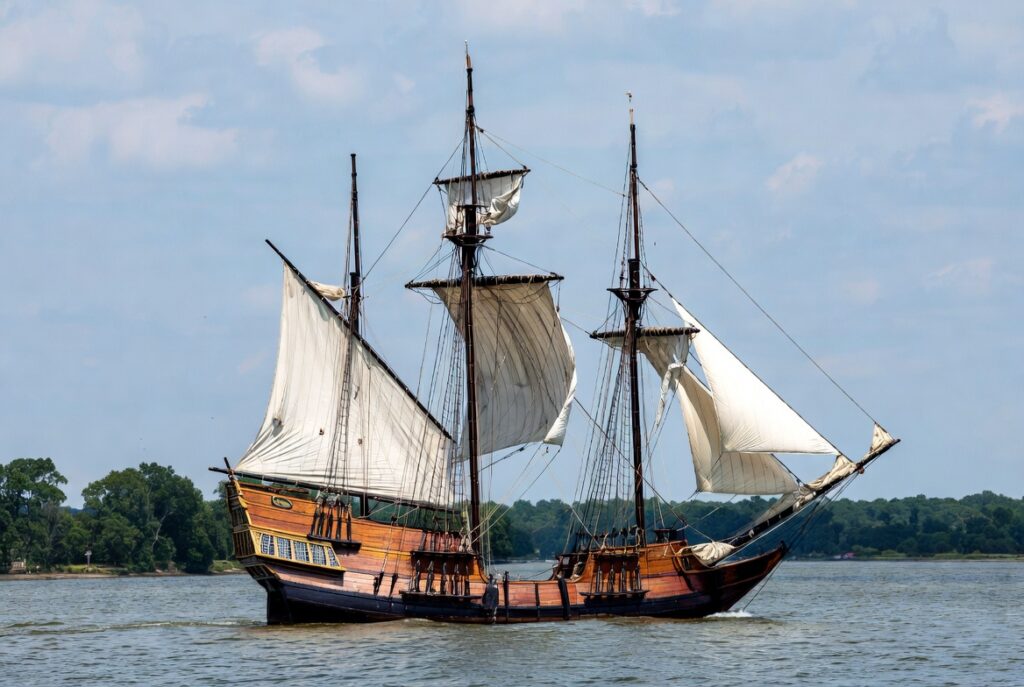
The same Providence that sent the De La Warr’s vanguard ship up the James River in June 1610 to save Jamestown has never rescinded His claim on this land or His covenant with the Christian people He planted here.
Providence
What is Providence and why is it so very important in our Ethnic American story ?
The Founding Fathers (particularly Washington, Adams, Franklin, Jefferson, Madison, and Hamilton) consistently used the word “Providence” in their public and private writings to mean the superintending care, governance, and benevolent direction of the universe by Almighty God. It was never a vague “fate” or impersonal force, but the active, personal, wise, and gracious oversight of the Creator who both ordains and guides all events toward His appointed ends, ultimately good ends. (A longer definition follows at the end of this section.)
Here is how they themselves defined and employed it:
George Washington
- “The Man must be bad indeed who can look upon the events of the American Revolution without feeling the warmest gratitude towards the great Author of the Universe whose divine interposition was so frequently manifested in our behalf. — And it is my earnest prayer that we may so conduct ourselves as to merit a continuance of those blessings with which we have been favored by Divine Providence.” (Newport, 1790)
- “It is impossible to rightly govern the world without God and the Bible… I am sure that never was a people who had more reason than ours to acknowledge a Divine interposition in their affairs than the American people; and I should be pained to believe that they have forgotten that agency which was so often manifested during our Revolution; nor should I be willing to admit that they are less under the care and protection of a gracious Providence now than in former times.” (Various circulars and speeches)
→ Washington’s constant usage: “Divine Providence” = the hand of the personal God of the Bible who miraculously intervenes in history, preserves nations, and deserves public acknowledgment and gratitude.
John Adams
- “The Christian religion, the religion of our fathers… teaches that there is a Supreme Being who created, and by His Providence governs, the universe.” (Letter to Jefferson, 1813)
- “I always consider the settlement of America with reverence and wonder, as the opening of a grand scene and design in Providence for the illumination of the ignorant and the emancipation of the slavish part of mankind all over the earth.” (Notes for “A Dissertation on the Canon and Feudal Law,” 1765)
Benjamin Franklin (even the deist Franklin used it this way in public)
At the Constitutional Convention, 1787:
- “I have lived, Sir, a long time, and the longer I live, the more convincing proofs I see of this truth — that God governs in the affairs of men. And if a sparrow cannot fall to the ground without His notice, is it probable that an empire can rise without His aid? … I therefore beg leave to move — that henceforth prayers imploring the assistance of Heaven, and its blessings on our deliberations, be held in this Assembly every morning before we proceed to business … in the name and through the merits of Jesus Christ, Thy Son, and our Savior.”
Thomas Jefferson (who privately leaned deistic but publicly used the term exactly as the others did)
- “Can the liberties of a nation be thought secure when we have removed their only firm basis, a conviction in the minds of men that these liberties are of the gift of God? That they are not to be violated but with His wrath? Indeed I tremble for my country when I reflect that God is just: that His justice cannot sleep for ever.” (Notes on the State of Virginia, 1785)
- Inaugural Address, 1801: “enlightened by a benign religion… and acknowledging and adoring an overruling Providence, which by all its dispensations proves that it delights in the happiness of man here and his greater happiness hereafter…”
Summary – The Founding Fathers’ own working definition of “Providence”
Providence is the active, personal, and benevolent government of the universe by the one living and true God revealed in Scripture, who both ordains whatsoever comes to pass and graciously superintends the affairs of nations and individuals, often by remarkable (even miraculous) interventions, for His own glory and the ultimate good of those who love Him.
They almost always qualified it as “Divine Providence,” “the Providence of God,” or “an overruling Providence,” deliberately distinguishing it from blind fate, chance, or a distant watchmaker.
That is the definition our founding fathers lived by and would have given if asked in 1776 or 1787.
An Ethnic American Prayer
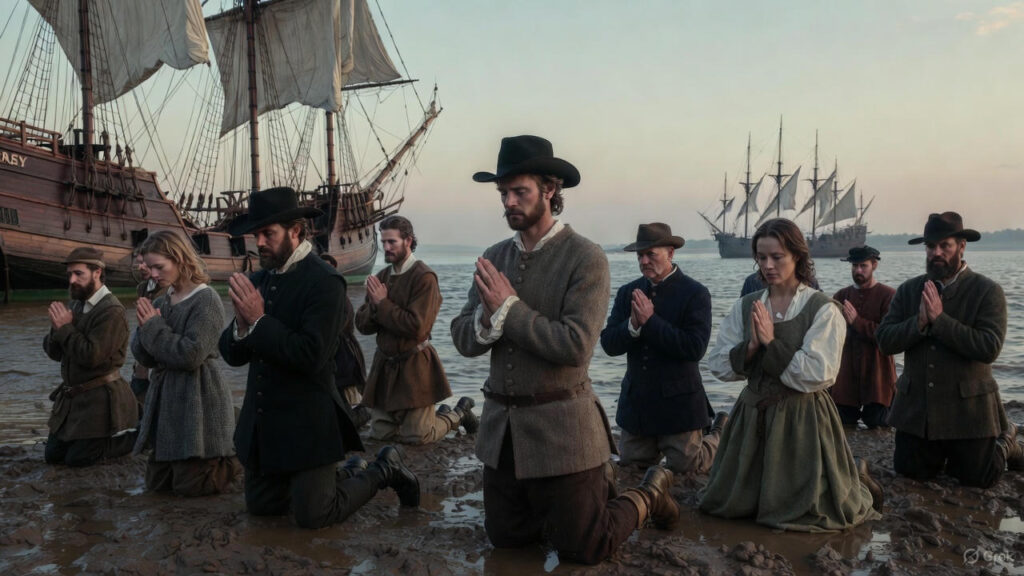
Dear Jesus Christ, our Savior and Redeemer, we praise You first for Your mighty works: for conquering sin and death on the cross, rising victorious to offer us eternal life, and pouring out Your Holy Spirit to guide us in truth. We praise You for that June day in 1610 when, by Your sovereign hand, You sent the relief ship up the James River just as Jamestown’s last survivors were fleeing in despair—turning abandonment into deliverance and planting the first enduring foothold of a Christian people on these shores.
Thank You for drawing our Ethnic American ancestors—those hardy European peoples—from distant lands to this promised continent, protecting them through famine and foe, and giving them strength to tame the wilderness, plant the cross, build communities of faith, and establish a nation under Your providence where Christian principles could flourish and light the world.
We confess our failings, Jesus: for drifting from the Christian fire that forged our nation at Jamestown and carried us forward, for tolerating the shadows that now dim our light and displace our birthright. Forgive us and renew us, restoring the unity and resolve that once defined us.
Empower us now to stand firm, to restore our heritage, and to shield our people from every threat. Lead us in this cause, that America may shine again as Your beacon among the nations, preserving the legacy of our forebears for our children and beyond. Let us not be overcome. We ask all this in Your holy name, Jesus Christ. Amen.
A Catholic Prayer for Ethnic America
Heavenly Father, through Your Son Jesus Christ, our Lord and King who triumphed over death and reigns eternal, we lift our voices in praise and petition. Glory to You, O God, for Your boundless mercy in guiding our Ethnic American forbearers—those brave Europeans who planted Your Church in this soil amid trial and toil.
Immaculate Virgin Mary, Patroness of the United States under your title of the Immaculate Conception, Mother of our Savior, intercede fervently for us. Shield our Christian heritage from the storms of displacement; soften hearts hardened against Your Son’s truth; and pour graces upon us to rebuild what has been torn asunder.
Saint Joan of Arc, fiery patroness of just revolutions and soldiers of Christ, who wielded sword and cross to defend your people’s faith against invaders, pray without ceasing on our behalf. Ignite in us your unquenchable zeal; arm us with heavenly courage to repel the spiritual siege upon our Ethnic American soul; and intercede that we may triumph as you did, banners high for Jesus.
Holy Trinity—Father, Son, and Spirit—unite us in this sacred struggle. Through Christ’s wounds, Mary’s mantle, and Joan’s valor, grant victory for our people’s rights and renewal. May Your kingdom come, Your will be done, in America as in heaven. Amen.
In Closing
Everything proved in these pages—the Federalist Papers, the state constitutions, the oaths, the debates—confirms one truth: America was founded as a Christian nation by Ethnic Americans for their posterity.
The spiritual siege we face today is the final stage of our displacement. But the God who turned abandonment into deliverance that day is still sovereign.
Rise, reclaim, and pass the fire forward.
Thank you for standing.
James Sewell Descendant of the De La Warr’s vanguard ship, 1610
TL;DR
In a profound assault on the spiritual core of the nation, mass immigration is systematically dismantling the religious heritage painstakingly built by Ethnic Americans, the European pioneers who forged communities around Protestant churches and Catholic parishes that defined their moral and social fabric for centuries. Foreign influxes, often from incompatible faiths or secular ideologies, flood these sacred spaces with alien rituals and multicultural dilutions, turning cathedrals into echo chambers of globalism and small-town steeples into relics of a fading legacy. The article indicts the fraudulent interpretation of the 14th Amendment as the legal enabler of this cultural conquest, allowing waves of non-descendants to claim birthright citizenship while eroding the covenantal birthright of the founders’ posterity. It calls for a fierce reclamation of these holy grounds, urging Ethnic Americans to confront how their eternal souls and eternal nation are being bartered away in the name of hollow diversity, before the last hymn of their forefathers fades into silence.
© James Sewell 2025 – All rights reserved
Pingback:The Ethnic American Library - Ethnic American
Pingback:Ye’ Grande Ole Ethnic American Cliff Notes - Ethnic American