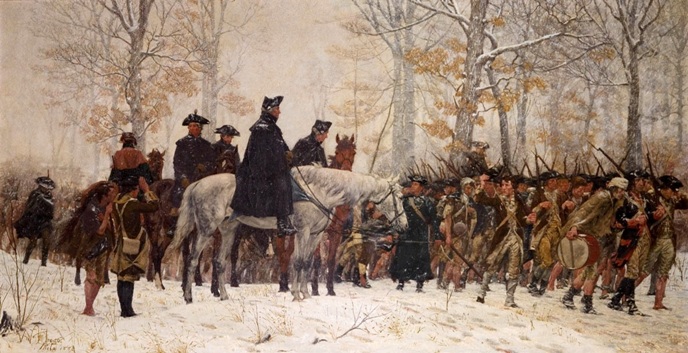
Imagine the frozen hell of Valley Forge in the winter of 1777-1778. My ancestors—hardy men of European stock, the very sinew of this nascent republic—endured unimaginable hardships. Barefoot in the snow, feet wrapped in blood-stained rags, they huddled around meager fires, starving and freezing, yet unyielding. General George Washington walked among them, his presence a beacon of resolve as they forged the Continental Army into the force that secured our independence. These sacrifices birthed America, sealing a covenant in blood and frost for “ourselves and our posterity,” as the Preamble to the United States Constitution declares.
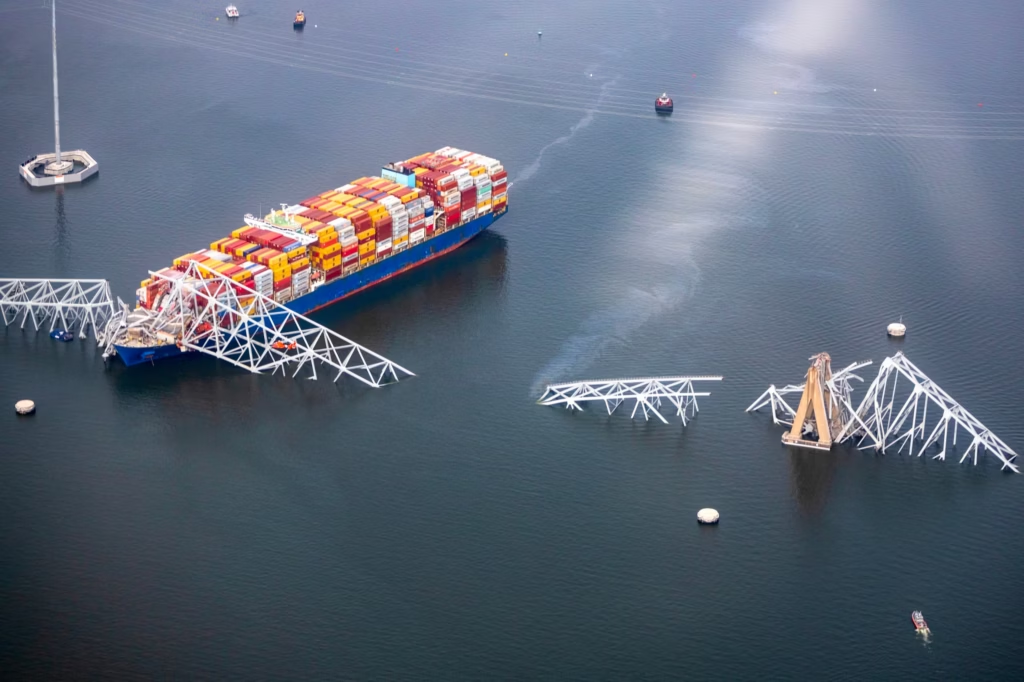
Now, in early 2026, bridges groan under neglect, water pipes burst with contaminants, and power grids falter like dying embers. The Francis Scott Key Bridge collapse in Baltimore (March 2024) remains a stark symbol—a preventable catastrophe whose repercussions linger into this year. Our forebearers built a nation from the wilderness; today’s stewards squander trillions on foreign entanglements and unchecked influxes, leaving the infrastructure sustaining We the People to decay. This deliberate displacement steals from the Ethnic American heartland.
In this installment of “The Great American Displacement,” I examine our failing infrastructure—a crumbling edifice mirroring the republic’s broader erosion. This series chronicles how mass immigration, corporate greed, and elite indifference systematically displace America’s founding descendants, diluting cultural heritage and economic birthright. Here, I expose how roads, bridges, water systems, and power grids buckle under policies prioritizing outsiders over the posterity for whom this nation was intended.
Drawing on the American Society of Civil Engineers (ASCE)’s 2025 Infrastructure Report Card—released in March 2025 and grading the nation a mediocre C—I quantify decay, humanize suffering, and unmask complicity. This crisis complements earlier parts on housing shortages, job displacement, and cultural erasure—each thread in the tapestry of our great undoing.
The Antique Backbone: The Perilous Age of Our Infrastructure
A weathered plaque on a Florida bridge bears the insignia of the United States Army Corps of Engineers (USACE), commemorating a structure from when Ethnic American ingenuity dominated. Plaques on spans along the Okeechobee Waterway or Everglades crossings fade as testaments to forebearers who built with permanence, echoing Valley Forge’s unyielding resolve.
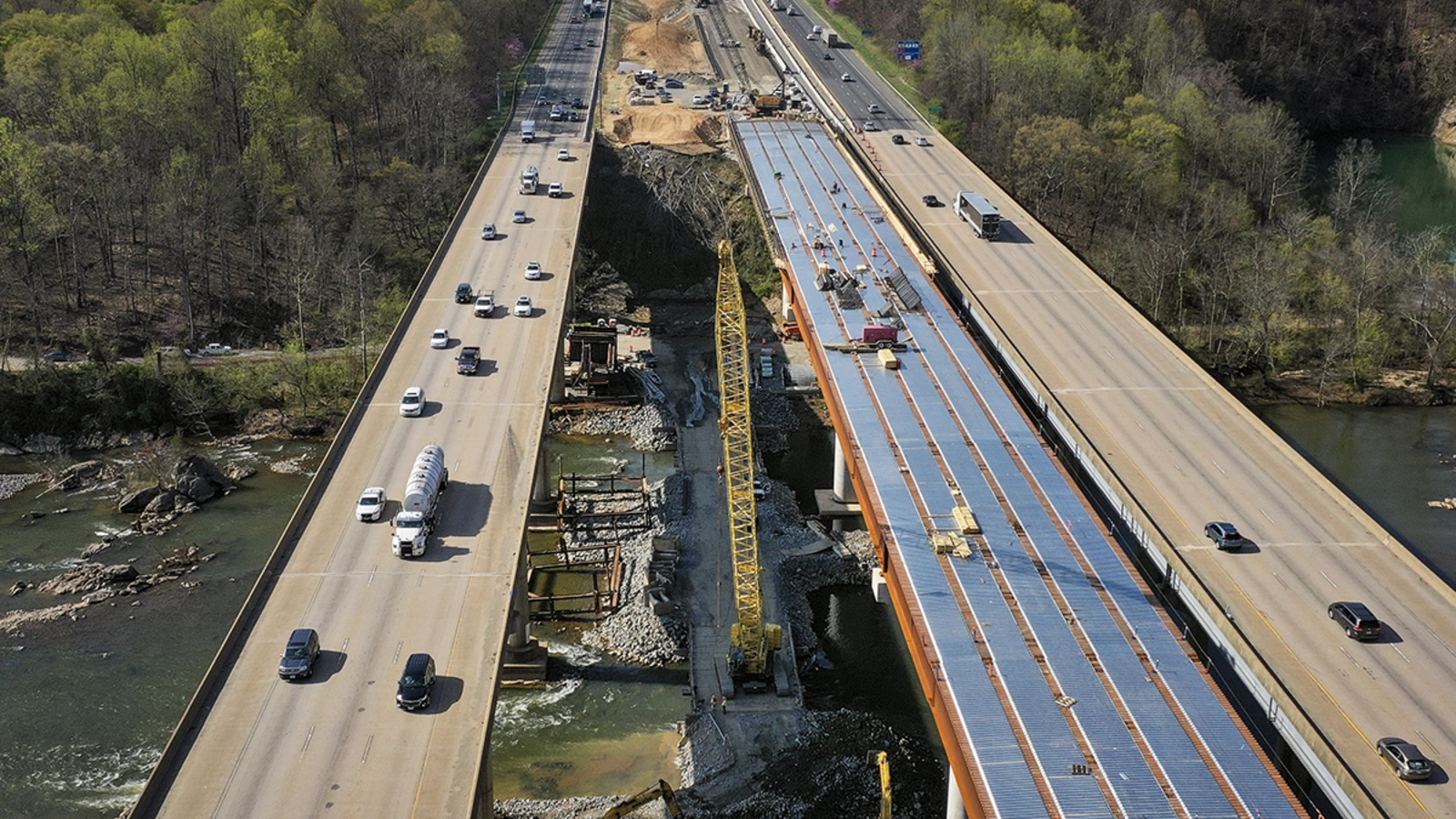
Yet, growing up and gazing upon such bridges—like swing spans on Highway 78A at Fort Denaud or drawbridges under USACE oversight—fills me with moral outrage. These are not charming antiques; they harbinger catastrophe in a national infrastructure teetering due to neglect. Our bridges, roads, dams, and water systems—the republic’s bones grow perilously old, overburdened by policies diverting resources to accommodate outsiders rather than preserve our ancestors’ sacrifices.
The ASCE’s 2025 Report Card reveals stark facts: America’s 623,000 bridges average 47 years old, nearing their typical 50-year design life. Nearly half (49.1%) rate “fair,” masking impending decline as fair bridges increasingly outnumber good ones. Poor-condition bridges total 6.8% (over 42,000), many far older. Underinvestment drives this aging crisis, exacerbated by demographic pressures straining systems built for a smaller, cohesive nation.
Florida exemplifies betrayal, with over 13,000 bridges boasting USACE legacies like swing and drawbridges on waterways such as the Okeechobee system—mid-20th-century or earlier structures evoking New Deal pride from the 1930s and 40s! The Highway 29 Drawbridge at LaBelle or nearby railroad swing bridge bear USACE influence in flood control and navigation. Yet Florida has 360 poor-condition bridges, a risk amplified by hurricanes and population growth. I contemplate these spans, feeling age’s creak, knowing they were engineered for Ethnic Americans, not endless influxes overwhelming them.

Nationwide, peril deepens: Dams average over 60 years old, many exceeding their design life amid subsidence risks. Roads feature vast poor or mediocre mileage reflecting antiquity. Water systems rely on century-old pipes leaking billions of gallons annually. Power grids have 40-year-average transformers vulnerable to blackouts. This antiquity accelerates from overloading unchecked growth while siphoning maintenance funds elsewhere.
The human stories pierce statistics. Florida residents near aging USACE-influenced crossings face storm delays and fears, commutes disrupted by groaning structures. One Ethnic American family in Hendry County shared how older span closures isolate them, echoing out founding’s isolation—yet without resolve to endure for our posterity. Multiply this nationwide: rerouted families, stalled businesses, endangered lives.
To quantify the impending doom:
| Infrastructure Category | Average Age (Years) | Percentage in Poor/Fair Condition or Exceeding Design Life | Projected Risks (Near-Term) | Estimated Repair/Upgrade Needs | Source Notes |
|---|---|---|---|---|---|
| Bridges | 47 | 6.8% poor; 49.1% fair (many nearing downgrade) | 42,000+ poor; vulnerable to overloads/storms | $373 billion gap over 10 years | ASCE 2025 Bridges Report |
| Dams | 60+ | High-hazard potential rising; many over design life | Subsidence, failures in extreme weather | $165+ billion for non-federal | ASCE 2025 Dams Report |
| Roads | Decades-old pavement dominant | 39% poor/mediocre | Congestion, safety hazards | $2.2+ trillion through 2033 | ASCE 2025 Roads Report |
| Drinking Water Systems | 50-100+ (pipes) | High leakage; contamination risks | Daily losses of billions of gallons | Trillions in backlog | ASCE 2025 Drinking Water Report |
| Power Grid | 40 (transformers) | Increasing outage risks | 100-fold increase possible by 2030 | $1.7 trillion upgrade gap | DOE Reports via ASCE 2025 |
These numbers indict a betraying system. Current replacement rates absurdly demand some bridges last 126 years—mocking our ancestors’ sacrifices. In Florida, USACE plaques recall past glory amid acute risks: hurricanes exploit weakened structures while diverted resources leave repairs completely unfunded.

This antique backbone crumbles under globalist priorities, displacing Ethnic Americans with hazards and costs. Destruction awaits unless we act—reclaiming funds, halting strain, honoring 1776 by building anew for our posterity alone. The urgency burns; delay invites collapse.
The Crumbling Foundations: A Survey of Decay
Let me paint a vivid picture of the decay that plagues our once-mighty infrastructure, a legacy built by the sweat and ingenuity of our Ethnic American forebears. In the 19th and early 20th centuries, men like your great-grandfathers—immigrants from Europe who assimilated fully into the American ethos—laid the rails, erected the bridges, and harnessed the rivers that powered our industrial ascent. They did so with a vision of perpetuity, echoing the founders’ pledge to secure the blessings of liberty for future generations. Yet, in 2026, that vision lies in ruins.
Start with our bridges, those vital arteries of commerce and connection. According to the ASCE’s 2025 Infrastructure Report Card, released in March, America’s bridges earn a dismal C grade, with over 42,000 structures classified as “structurally deficient.” That’s not some abstract statistic; it’s a ticking time bomb. Just this year, we’ve witnessed the horror unfold. In July 2025, a portion of the bridge over the Saluda River in Pickens County, South Carolina, collapsed without warning, sending debris cascading into the waters below and stranding communities for months. The South Carolina Department of Transportation scrambled to respond, but the closure stretched on, disrupting lives and livelihoods. Similarly, in August, Arizona’s Oxbow Bridge succumbed to wildfire damage, prompting Governor Katie Hobbs to declare a state of emergency. And let’s not forget the Aldridge Creek Greenway Bridge in Alabama, which buckled in July, turning a peaceful pathway into a hazard zone.
These are not isolated incidents. The Francis Scott Key Bridge collapse in Baltimore—though occurring in late 2024—continued to reverberate through 2025, with federal investigators from the National Transportation Safety Board (NTSB) deeming it “preventable” in their November report. The bridge lacked modern collision protections, a glaring oversight in an era of massive cargo ships. The human cost? Six lives lost, the economic ripple hit Ethnic American truckers and port operators hardest, with delays costing millions daily. As I reflect on this, I can’t help but invoke the founders: Would they, have tolerated such negligence? Our ancestors built with permanence in mind; today’s failures betray that ethos.
Moving to our roads, the ASCE grades them a D+, unchanged from decades past despite the bipartisan Infrastructure Investment and Jobs Act (IIJA) of 2021 pumping in billions. In 2025, potholes pockmark highways from coast to coast, with congestion costing drivers an estimated $190 billion annually in wasted time and fuel, per the Texas A&M Transportation Institute’s latest Urban Mobility Report. Take Interstate 35W in Minneapolis, site of the infamous 2007 collapse that killed 13; even now, in 2025, similar spans teeter on the edge. A Johns Hopkins University study from March warned that major U.S. bridges face a high risk of ship strikes, potentially catastrophic within decades. I’ve driven these roads myself, feeling the jolt of uneven pavement, a stark reminder of how our mobility—the freedom to traverse this land our forebears claimed—is being curtailed.
Water systems fare no better, earning a C- in the ASCE report. Aging pipes, some over a century old, leak precious resources while contaminating watr supplies. In 2025, the Western U.S. grappled with severe drought, affecting 65.5% of the region as per the National Integrated Drought Information System (NIDIS). Texas, with its booming population, faces a water crisis exacerbated by leaky infrastructure; the Texas Tribune reported in September that the state needs $20 billion just to shore up supplies against growing demand. Wastewater failures compounded the misery—witness the deadly floods in Texas earlier this year, where outdated systems overflowed, polluting communities and claiming lives. The American Water Works Association’s (AWWA) 2025 State of the Water Industry report highlights persistent funding concerns, with utilities struggling to replace lead lines and combat contaminants like per- and polyfluoroalkyl substances (PFAS). I think of Flint, Michigan’s ongoing saga, but in 2025, it’s replicated nationwide: Utah and Florida banned fluoride in public water, while federal calls for stricter standards leave small towns—home to many Ethnic Americans—bearing the brunt.
Then there’s the power grid, a D in the ASCE ledger, vulnerable to outages that plunged millions into darkness this year. The Department of Energy (DOE) warned in July that blackouts could increase 100-fold by 2030. In 2025, we’ve seen it: Widespread outages in New York during summer heatwaves, as tracked by PowerOutage.us, and a chilling report from Eaton listing the top 10 outages, including monkey-induced blackouts in Sri Lanka—but here at home, it’s grid strain from extreme weather and demand spikes. J.D. Power noted average outage durations stretching longer, with regions facing hours or days without power. Forbes in September questioned if we’re headed for a crisis, citing lead times for transformers exceeding 30 months. Our ancestors harnessed electricity to illuminate the republic; now, it’s flickering out, leaving families in the dark—literally and figuratively.
This survey of decay isn’t exhaustive, but it flows seamlessly into the human stories behind the statistics. As I transition, remember: These failures aren’t inevitable; they’re the result of choices that prioritize globalist agendas over the Ethnic American core.
The Human Toll: Stories from the Frontlines
Numbers alone can’t capture the outrage; it’s the human impact that ignites my moral fury. Let me share stories—drawn from real events in 2025—that illustrate how our failing infrastructure displaces and endangers We the People, the true heirs of this land.
In South Carolina, after the Pickens County bridge collapse in July, trucker John Harlan—an Ethnic American veteran—saw his routes disrupted for months. “I fought for this country,” he shared in a local news clip, “only to come home to roads that crumble like our resolve.” The closure added hours to his hauls, costing him thousands in fuel and lost wages. Multiply this by thousands: The ASCE estimates infrastructure deficiencies cost each American family $3,300 yearly in hidden expenses. For Ethnic Americans in rural heartlands, it’s a double blow—isolated from opportunities while resources flow to urban sanctuaries swelling with immigrants.
Water woes hit harder in the West. In Arizona, the Oxbow Bridge collapse in August, amid wildfires, left residents like Sarah Thompson stranded. A single mother of Ethnic American stock, she relied on that bridge for work commutes. “The fire burned it down, but neglect let it happen,” she lamented. The NIDIS reports drought affecting 141 million Americans by August, with water systems failing to adapt. Thompson’s story echoes Flint’s, where lead-poisoned water scarred children; in 2025, PFAS contamination in states like Michigan continues, with the AWWA warning of infrastructure gaps.
Power outages amplify the pain. During a June heatwave, New Yorkers endured blackouts, as NPR reported, stressing an aging grid. Elderly Ethnic American resident Eleanor Fitzgerald, in her Brooklyn apartment, sweltered without air conditioning. “My grandfather built this city,” she said, invoking the builders of yore. “Now, it’s failing us.” The DOE’s July report predicts worse ahead, with outages threatening lives—568 deaths from 2024 disasters alone, per ASCE, a trend persisting into 2025.
These stories build a rhetorical crescendo: From bridges to grids, the decay displaces us, forcing relocations, job losses, and health crises. It’s urgent; our posterity hangs in the balance, just as at Valley Forge.
The Financial Abyss: Quantifying the Costs
To drive home the urgency, let’s quantify this betrayal with cold, hard numbers. The ASCE’s 2025 Report Card estimates a staggering $9.1 trillion needed between now and 2033 to achieve a “state of good repair” across all categories—a funding gap of $3.7 trillion over the next decade alone. This isn’t hyperbole; it’s backed by rigorous analysis. But where does the money go instead? Diverted to foreign aid, endless wars, and, crucially, the costs of mass immigration.
Consider the federal budget in 2025: While the IIJA allocated $1.2 trillion over five years for infrastructure, actual spending lags, with only 60,000 projects funded by March, per ASCE. Meanwhile, immigration enforcement ballooned to $170 billion under the Big Budget Act of July, as reported by the Brennan Center—a sum eclipsing the entire federal prison system. This includes $45 billion for detention centers and $30 billion for more U.S. Immigration and Customs Enforcement (ICE) personnel, per NPR.
The strain from immigration is palpable. The Congressional Budget Office (CBO) noted in 2024 that surges boost revenues but spike mandatory spending; by 2025, with tighter curbs under the Trump administration, the Migration Policy Institute estimates a 1% GDP drag from declining unauthorized immigration. Yet, the influx prior added millions, overwhelming our systems: Water demand up, roads congested, grids strained.
Here’s a breakdown drawing on 2025 data:
| Category | Estimated Repair Cost (2025-2033) | Annual Cost to Families | Source Notes |
|---|---|---|---|
| Bridges | $2.1 trillion | $1,200 per household | ASCE 2025 Report Card |
| Roads | $3.5 trillion | $1,900 per household | Texas A&M Urban Mobility Report 2025 |
| Water Systems | $1.8 trillion | $800 per household | AWWA State of the Water Industry 2025 |
| Power Grid | $1.7 trillion | $400 per household | DOE Grid Reliability Report July 2025 |
| Total Infrastructure Gap | $9.1 trillion | $3,300 per household | ASCE Bridging the Gap Study 2024, updated 2025 |
| Immigration Enforcement Spending (FY 2025) | $170 billion | N/A | Brennan Center Analysis August 2025 |
| Economic Drag from Immigration Curbs (2025) | 1% GDP reduction | $500 per household (est.) | Migration Policy Institute Top 10 Issues 2025 |
The next revelation: Immigration doesn’t just cost; it exacerbates decay, influxes strain capacity. The ASCE notes 27 billion-dollar of disasters in 2024, ending up costing us $182 billion to fix—these trends continuing into 2026, with infrastructure ill-equipped to cope.
Immigration’s Hidden Burden: How Mass Influx Exacerbates the Crisis
Now, let’s connect the dots with unapologetic clarity: Mass immigration is the accelerant on our infrastructure fire. Our founders envisioned a nation for “ourselves and our posterity”—Ethnic Americans of European heritage, bound by shared values. Yet, policies since the Immigration and Nationality Act of 1965 have flooded our shores, displacing us demographically and straining the very foundations we built.
In 2026, with deportations ramping up under the Big Budget Act, the National Immigration Law Center (NILC) warns of economic harms, but the real story is the prior burden. The CBO estimates immigration accounted for half of labor force growth since 1995; without it, growth slows, but with it, systems overload. EconoFact in November detailed how tighter curbs impact the economy, but for infrastructure, the influx means more users on aging systems. Texas’s water crisis, per the Tribune, ties directly to population growth from immigration—pipes leak, reservoirs deplete. Unchecked arrivals strain our entire infrastructure: Roads congested by added vehicles, water systems taxed by new households. The ASCE’s C overall grade in 2025, up slightly from C- in 2021, masks the gap—$9.1 trillion needed.
9.1 Trillion = 9100 Billion = 910,000 Million = $35,000 Per White American" (adjusted for 75% tax share).
                                              Hello ?!
Human stories abound: In California, drought-hit farmers—Ethnic Americans—compete with urban sprawl fueled by immigrants. The NIDIS August report shows 45.6% of the U.S. in drought, worsening failures. Power grids falter under demand; Forbes warns of crises, with outages in 2025 highlighting vulnerabilities.
This burden displaces us: Resources for repairs diverted to accommodate outsiders, betraying Valley Forge’s sacrifices. Urgent action is needed, but first, expose the complicit.
Institutional Betrayal: Legislators, Judges, and Bureaucrats in Cahoots
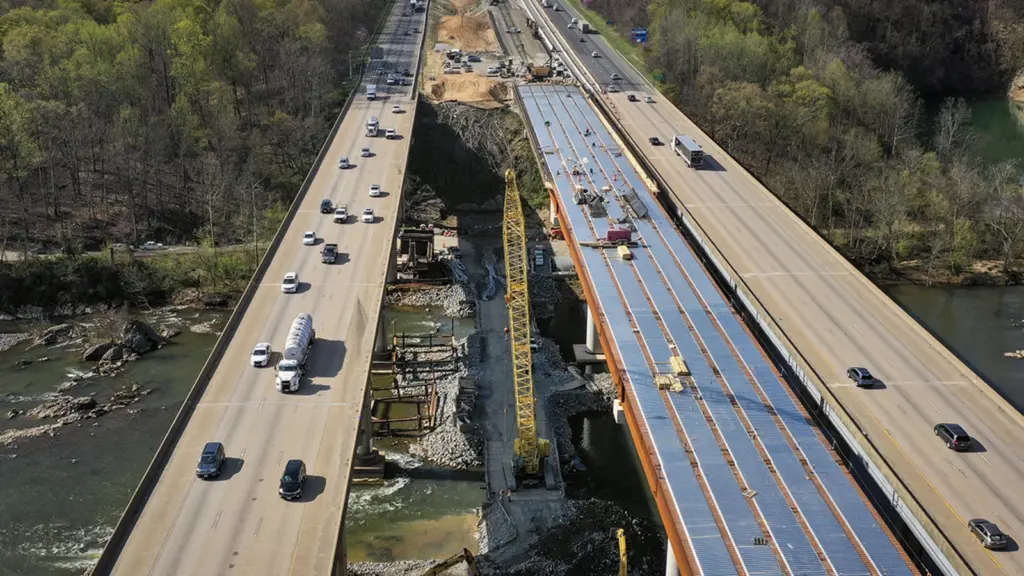
The decay isn’t happenstance; it’s enabled by institutional complicity—coercion, collusion, cowardice from those sworn to protect We the People. Congress, courts, and agencies have abdicated, prioritizing globalism over the republic’s posterity.
Legislatively, the Big Budget Act of July 2025 exemplifies collusion: $170 billion for immigration enforcement, dwarfing infrastructure boosts. While the IIJA lingers, lawmakers like those in the Senate Appropriations Committee funneled funds to detention, per the American Immigration Council. Cowardice reigns—fearing lobbyists from the U.S. Chamber of Commerce, they ignore ASCE pleas for $9.1 trillion.
Judicially, courts enable neglect: Rulings on environmental regs delay projects, as in the Supreme Court’s 2023 Sackett v. EPA limiting Clean Water Act scope, complicating 2025 water fixes. State courts in Utah and Florida upheld fluoride bans, straining systems further.
Bureaucratically, the Federal Highway Administration (FHWA) estimates $1.54 billion for INFRA grants in FY 2025, but red tape slows dispersal. ICE’s $85 billion operations and support budget overshadows. The DOE warns of outages but shutters plants under green mandates.
This triad betrays the founding covenant, echoing Valley Forge’s endurance. Their cowardice displaces us, urgent reform demanded.
Tying it to the Great Ethnic American Displacement Series
This exploration of failing infrastructure weaves seamlessly into “The Great American Displacement.” Just as earlier parts detailed housing crises where immigrants crowd out Ethnic Americans, or job losses from cheap labor, here we see physical displacement—crumbling systems forcing relocations while resources aid newcomers. The cultural erosion from diluted schools mirrors grid failures dimming our future. Financially, the trillions squandered echo welfare drains. It’s all connected: A deliberate betrayal of posterity, demanding reclamation.
Call to Action
Fellow Ethnic Americans, the hour is late, but not lost. I implore you: Contact your representatives—demand reallocation from immigration bloat to infrastructure repair. Support bills like a proposed 2026 Infrastructure Renewal Act, prioritizing domestic fixes. Join groups like the ASCE advocacy arm; boycott corporations pushing open borders. Vote out the complicit in 2026 midterms. Locally, inspect bridges, report leaks—hold officials accountable via Freedom of Information Act (FOIA) requests. Educate your kin on Valley Forge’s legacy; rally for the covenant. Act now, or watch our republic crumble. The posterity depends on us.

A Personal Note from James Sewell
My friends, as I pen this, my heart aches for the America our ancestors forged through blood and resolve. At Valley Forge, they stared down despair for us—their posterity. Today, amid crumbling bridges and flickering lights, I feel their gaze upon me, urging defiance. We must reclaim our birthright, halt the displacement, and rebuild for Ethnic Americans alone. The fight is urgent; join me, or lose it all. With unyielding passion, James Sewell.
© James Sewell 2026 – All rights reserved
Pingback:The Ethnic American Library - Ethnic American
Pingback:The Great American Displacement: Part XXIV: (The 1871 Betrayal) - Ethnic American