
Gun Control Tyranny: Stripping Our Means of Resistance While Importing Threats
Picture the resolute Ethnic American families right now in rural Arizona or Texas—free white persons of good moral character, as defined by the Naturalization Act of 1790—arming themselves to protect their homes, their children, and their livestock from the kinds of threats that have become far too common along the southern border and in once-quiet rural counties. They reach for rifles and handguns that have been in their families for generations, tools of self-reliance passed down from fathers who worked the land and defended it.
Yet before they can even chamber a round in legitimate defense, they face a growing web of federal and state restrictions: laws that allow temporary firearm removal based on a single anonymous complaint, background-check delays that leave them waiting while dangers mount, classifications by federal agencies that turn common sporting rifles into restricted items, and ever-expanding definitions of prohibited persons that sweep up law-abiding citizens over decades-old medical notes or casual substance use in states where that substance is now legal. Meanwhile, the border—though crossings have dropped dramatically under new enforcement—still allows enough criminal elements and residual threats to filter through that communities feel the pressure every single day. This is the betrayal unfolding in real time in February 2026: our people deliberately disarmed through aggressive, layered regulations, even as imported chaos, however reduced in volume, leaves them exposed in the very lands their ancestors secured through blood, sweat, and unyielding resolve.
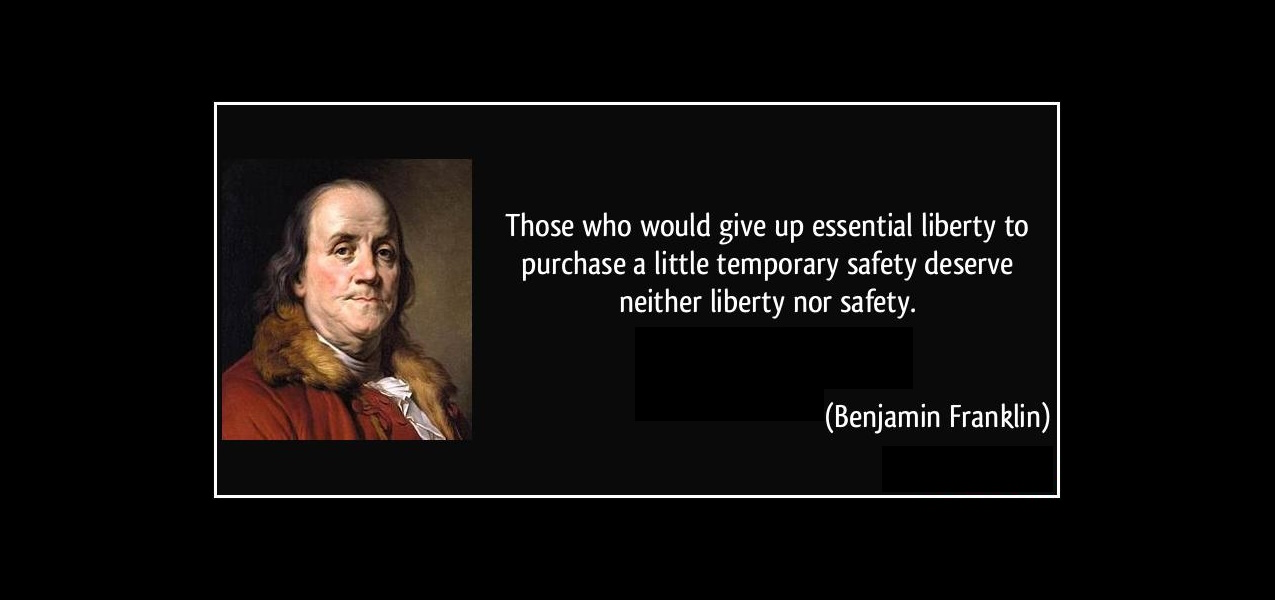
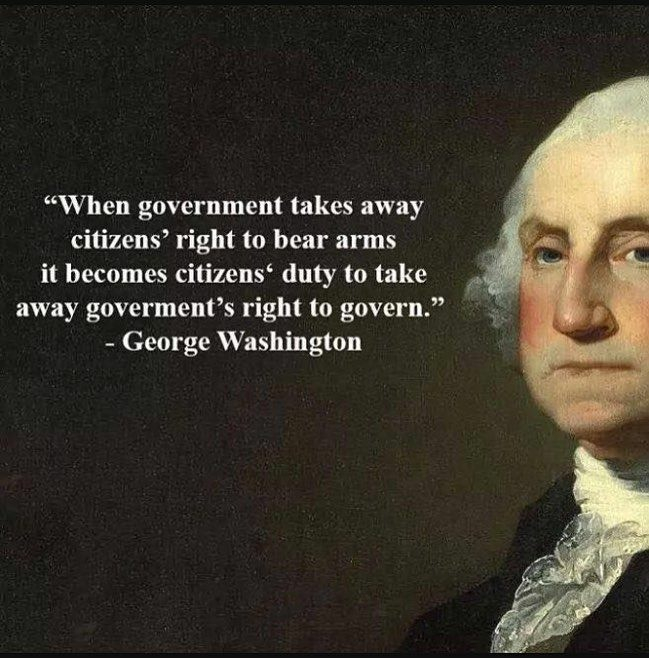
In this installment, I expose the core deceit at the heart of the displacement project: gun control as a deliberate, multi-front mechanism designed to render Ethnic Americans—past, present, and future free white persons of good moral character under the 1790 standard—utterly defenseless against both imported physical threats and the slow-motion encroachment of governmental overreach. This assault directly mocks the covenant our founders made with posterity when they wrote the Second Amendment to the United States Constitution, and it fits seamlessly into the broader series by confronting the practical, life-or-death vulnerabilities that earlier parts only implied.
The crime surges documented in Part XI and Part XII, the unchecked invasions chronicled in Part V, the institutional betrayals laid bare in Part XIX and Part XX—all of them become exponentially more lethal when the intended victims are stripped of the one right that makes meaningful resistance possible. Whether your lineage stretches back to the first English settlers at Jamestown or arrives with later waves of hardworking Europeans who met the 1790 criteria through honest labor and moral uprightness, these policies are aimed squarely at your ability to defend your family, your property, and your heritage in an era of rising peril. The emphasis in this article is squarely on the here and now—2025 through February 2026 developments: the rapid spread and expansion of temporary firearm-removal laws, the latest regulatory maneuvers by the ATF, pending cases before the Supreme Court of the United States, congressional proposals, and the stark asymmetry between tightened domestic disarmament and a border that, while much improved, still permits enough residual danger to keep families on edge.
The Immediate Threat: Today’s Disarmament Push Against Law-Abiding Ethnic Americans
Right now, in February 2026, the assault is accelerating across multiple fronts, with state legislatures, federal agencies, and advocacy organizations working in concert to tighten the noose.
In Maine, voters narrowly approved a temporary firearm-removal ballot measure in November 2024; by late 2025 the law was fully active. It allows immediate family members, household members, or law enforcement to petition a court for an extreme risk protection order without the respondent present or even notified in advance. Once granted, firearms must be surrendered within hours or days, often on nothing more substantial than a sworn statement alleging future risk. Implementation has been rocky, with sheriffs in rural counties publicly expressing concern over due-process violations and resource strain, yet the law stands and is already seeing petitions filed, as reported by local outlets such as the Bangor Daily News.
Colorado is moving even more aggressively. Senate Bill 26-004, introduced in the 2026 session, has cleared committee and is advancing toward a floor vote. If passed, it would dramatically expand the universe of eligible petitioners beyond police and immediate family to include school districts from kindergarten through twelfth grade and higher education institutions, hospitals, behavioral health facilities, and even co-responder teams that pair law enforcement with mental-health clinicians. Proponents argue this closes dangerous gaps; critics—including rural sheriffs and Second Amendment advocates—warn that it creates a pipeline for institutional actors to disarm individuals based on subjective assessments, hearsay, or political disagreement. This builds directly on Colorado’s 2019 red-flag statute and 2023 amendments that already lowered the evidentiary bar. In counties where Ethnic Americans form the majority of gun owners, the fear is palpable: a school counselor’s report, a hospital social worker’s note, or a one-time behavioral-health interaction could trigger an extreme risk protection order and leave a working family defenseless, as covered by the Colorado Sun.
California continues to lead the nation in restrictive layering. New laws taking effect in 2026 require microstamping on newly manufactured semiautomatic pistols if the technology proves viable by July, mandate annual training and certification for every licensed firearms dealer, and expand the roster of unsafe handguns that cannot be sold. The state’s assault-weapon definition remains among the broadest in the country, banning features that are standard on many rifles owned by rural and suburban hunters, ranchers, and home defenders. According to the latest rankings from Everytown for Gun Safety, California again holds the top spot for strictest gun laws—yet violent crime in major cities remains stubbornly high, while rural owners bear the brunt of compliance costs and prohibitions, as detailed in reports from the Los Angeles Times and San Francisco Chronicle.
At the federal level, Representative Lucy McBath and allies reintroduced versions of the Federal Extreme Risk Protection Order Act in early 2026, seeking to create a nationwide framework that would allow petitioners in any state to seek extreme risk protection orders through federal courts when state law is deemed insufficient. Simultaneously, the ATF published an interim final rule on January 22, 2026, revising the regulatory definition of unlawful user of or addicted to any controlled substance under title 18 of the United States Code, section 922, subsection g, paragraph 3. The change narrows the scope slightly—excluding remote or sporadic use in states where marijuana is legal—but still leaves room for denial or revocation based on self-reported or third-party information about past use, prescription opioids, or even certain antidepressants. For Ethnic Americans in rural areas facing chronic pain, stress, or mental-health challenges without easy access to specialists, this rule creates yet another avenue for disarmament through administrative fiat, as analyzed by the National Rifle Association Institute for Legislative Action.
Across 22 states plus the District of Columbia, temporary firearm-removal laws are now on the books, with recent expansions in Delaware extending maximum order duration to 5 years and pilot programs in several California counties that allow district attorneys to file petitions directly. Temporary firearm-removal cases continue to disproportionately involve white males in their 30s to 50s, often in rural or semi-rural counties, where firearm ownership intersects with higher suicide rates driven by economic isolation, family breakdown, and lack of mental-health infrastructure. The pattern is clear: these laws are not primarily about stopping mass shooters or gang members; they are tools that most frequently remove firearms from ordinary, law-abiding Ethnic American men who own guns for legitimate protection, hunting, and heritage.
Imagine—an Ethnic American long-haul truck driver living just outside Phoenix, father of 3, who keeps a rifle and a handgun in a locked safe for home defense after hearing multiple reports of property break-ins and vehicle thefts linked to transient groups passing through the area. One day his estranged sister, upset over a family dispute, files a temporary firearm-removal petition claiming he might be dangerous because of a decade-old argument and a prescription for pain medication after back surgery. Within 48 hours deputies arrive, seize his firearms, and he is left unable to protect his family while the case winds through court. Or consider the rancher in southern Colorado whose grandson’s school counselor flags him after the boy mentions Dad’s guns during a routine counseling session. A temporary firearm-removal order is issued based on institutional concern rather than evidence of any crime. These are not hypotheticals; they reflect the real-world operation of the laws being expanded right now, as documented in state court filings and local news coverage from outlets like the Arizona Republic and Denver Post.
This is not public safety. This is targeted disarmament, stripping the means of resistance from the very people who have historically borne the responsibility of defending hearth and home, all while external pressures—though diminished—have not vanished entirely.
The Border Reality: Imported Risks While Defenses Are Stripped
In early 2026 the southwest border looks dramatically different from just 2 years ago. Monthly migrant encounters have fallen to historic lows—Border Patrol apprehensions in January hovered between 6000 and 7000, the lowest levels recorded in more than 50 years according to both Pew Research Center analysis and official statistics from United States Customs and Border Protection. Nationwide encounters for the month totaled roughly 34000, an 87 percent drop from peak periods under the previous administration. Zero interior releases have been recorded for 9 consecutive months, with deportations and expedited removals running at high volume. The policy shift—tighter asylum rules, increased Mexican cooperation, and aggressive enforcement by Immigration and Customs Enforcement—has produced results that even critics acknowledge.
Yet the threat environment for border-adjacent Ethnic American communities has not disappeared; it has merely changed shape. Immigration and Customs Enforcement continues to arrest and remove individuals with serious criminal convictions—murderers, sex offenders, gang members—while detention centers remain near capacity, holding tens of thousands, the majority of whom entered without criminal records but still represent a resource and social-services burden on local counties. Cartel-linked activity, human smuggling corridors, and residual cross-border crime including vehicle theft rings, drug drops, and property crime persist in pockets along the Rio Grande and in Arizona’s borderlands. Divisions of the Bureau of Alcohol, Tobacco, Firearms and Explosives report that federal gun-trafficking and firearms-prosecution cases have declined as agents are reassigned to immigration-related task forces, allowing more illicit firearms to remain in circulation domestically.
For rural and suburban Ethnic American families, the math is brutal: defensive gun uses—conservatively estimated at 489,000 incidents per year where a firearm is fired in self-defense, and up to 1.67 million when including mere displays that deter crime—remain one of the most effective, least-publicized crime-prevention tools in America. These incidents occur disproportionately among white gun owners in rural and semi-rural high-risk zones, according to peer-reviewed surveys from Georgetown University and publications in the Journal of the American Medical Association. When temporary firearm-removal laws, expanded petitioner lists, and restrictive classifications remove those firearms—even temporarily—the protective effect vanishes. A family that once could deter a late-night intrusion or stop a home invasion is left with 911 on speed dial and a response time measured in tens of minutes.
Personal stories accumulate daily. An Arizona couple in their late 40s, both Ethnic American, live on a small acreage outside Yuma. They have followed the news: crossings are down, but they still see unfamiliar vehicles on back roads at odd hours and have had tools stolen from outbuildings. The wife has a concealed-carry permit; the husband keeps a rifle by the bed. Yet after a routine doctor visit for anxiety medication prescribed after a job loss during the 2020s economic turbulence, they worry that a single misinterpretation of medical records could trigger a temporary firearm-removal petition under the expanded definition from the ATF or a new state law. In Texas border counties like Hudspeth or Kinney, ranchers report similar anxieties: property damage from trespassers is down but not gone, and every new restriction on magazine capacity or rifle features makes it harder to mount an effective response to multiple intruders or a large animal threat on isolated land, as reported by local papers such as the El Paso Times.
This is the lived asymmetry in 2026: even with dramatically fewer crossings, the residual imported risks—combined with domestic criminal elements—continue to demand armed self-reliance, while every layer of regulation chips away at that very capability.
Defensive Necessity: Current Statistics on Self-Defense Amid Rising Vulnerabilities
Defensive gun uses are not a relic of the past; they are a daily reality in 2026. Credible estimates place the annual number between 489,000 incidents where a firearm is fired in self-defense and 1.67 million when including cases where brandishing or verbal warning with a visible firearm ends the threat without a shot fired. The vast majority—roughly 80 to 90 percent—resolve peacefully, with no injury to the defender or bystanders. Handguns are the most commonly used tool in home-defense scenarios, while long guns predominate in rural property-defense situations.
White Americans, who report firearm ownership at approximately 38 percent significantly higher in rural and suburban counties, account for the largest share of these defensive incidents. Other demographic groups show lower ownership rates and correspondingly fewer defensive uses, meaning Ethnic Americans carry a disproportionate share of the self-defense burden in areas where police response is slowest and threats most immediate.
Economic modeling reinforces the point. The societal cost of gun violence—medical treatment, lost productivity, criminal-justice expenditures—runs into the hundreds of billions of dollars annually. Defensive interventions avert an enormous portion of that cost: each successful defense prevents victimization expenses that average tens of thousands of dollars per incident and, in aggregate, save billions. Remove the firearm from the equation and those costs transfer directly to the victim—medical bills, therapy, property loss, and psychological trauma.
Picture a working-class Ethnic American homeowner in the Louisville suburbs, awakened at 2 in the morning by the sound of shattering glass. He retrieves his handgun from the bedside safe, announces his presence, and the intruders flee without a shot fired. The family sleeps safely; the police arrive 30 minutes later to take a report. Multiply that scene by hundreds of thousands annually across rural America and suburban fringes, and you begin to grasp why disarmament policies strike so deeply at the security of our people.
Quantified Betrayal: 2026 Data on Disarmament and Border Threats
| Category | Statistic (2025–2026) | Impact on Ethnic Americans | Source Notes |
|---|---|---|---|
| Defensive Gun Uses | 489,000 (discharge) to 1.67 million (including displays) annually | Higher reliance in rural and suburban white areas; removal of firearms eliminates primary deterrent | Journal of the American Medical Association Network Open 2025 study; Georgetown National Firearms Survey; Ammo.com compilation |
| Gun Ownership by Race | Whites approximately 38 percent; other groups lower | Rural and suburban whites targeted by temporary firearm-removal expansions and feature bans | Pew Research Center 2024–2025 data |
| Southwest Border Encounters | Lowest in more than 50 years; January 2026 approximately 6,000–7,000 apprehensions | Criminal-alien arrests and residual activity persist; strains border counties despite national decline | Pew Research Center February 2026 analysis; United States Customs and Border Protection monthly statistics |
| Immigration and Customs Enforcement Enforcement and Detentions | High-volume removals; detention population elevated | Resource burden on local communities continues; non-criminal migrants still require processing | Transactional Records Access Clearinghouse Immigration quick facts; Department of Homeland Security press releases |
| Temporary Firearm-Removal Laws and Expansions | 22 states plus District of Columbia; Maine active 2025, Colorado Senate Bill 26-004 advancing | Disproportionate effect on rural white males amid elevated suicide rates and institutional petitioner access | Everytown for Gun Safety state rankings; World Population Review temporary firearm-removal map; Colorado Newsline coverage |
| Bureau of Alcohol, Tobacco, Firearms and Explosives Unlawful User Rule | January 22, 2026 interim final rule narrows some denials | Residual risk of erroneous or pretextual blocks for rural Ethnic Americans using legal substances | Federal Register January 2026; National Rifle Association Institute for Legislative Action analysis |
| Annual Economic Cost of Gun Violence | Hundreds of billions (medical, lost work, justice system) | Defensive uses avert massive costs; disarmament shifts burden to victims and taxpayers | Everytown Research and Policy report |
These figures lay bare the fundamental imbalance: every policy layer that removes firearms from law-abiding Ethnic Americans coincides with a threat environment that—while improved nationally—still demands the ability to defend oneself locally.
Institutional Treachery: 2026 Complicity in Legislative, Judicial, and Bureaucratic Overreach
The coordinated nature of this disarmament campaign is impossible to miss in 2026. Congress continues to entertain bills that would federalize extreme risk protection orders, creating a backdoor for nationwide enforcement even in states that have rejected temporary firearm-removal laws. The Bureau of Alcohol, Tobacco, Firearms and Explosives pushes regulatory changes—some narrowing scope, others quietly expanding enforcement discretion—that keep the pressure on. Pending cases before the Supreme Court of the United States loom large: United States versus Hemani, challenging the categorical disarmament of unlawful users of controlled substances under title 18 of the United States Code, section 922, subsection g, paragraph 3, has oral arguments scheduled for March 2026; a decision could either rein in or entrench broad prohibitions. Wolford versus Lopez, concerning Hawaii’s near-total ban on carry in most private property open to the public, was argued earlier and awaits ruling; an expansive interpretation would green-light similar restrictions nationwide. Lower courts continue to defer to legislative and agency judgments in many cases, upholding magazine limits, semiautomatic rifle bans, and temporary firearm-removal procedures despite the history-and-tradition test established in New York State Rifle and Pistol Association versus Bruen.
State legislatures in blue and purple states race to outdo one another with new petitioner categories, longer order durations, and lower evidentiary thresholds. Sheriffs in red counties sometimes refuse to serve extreme risk protection orders on constitutional grounds, but they face funding cuts, civil lawsuits, and political pressure. The result is a multi-layered pincer movement: Congress funds and incentivizes, agencies write the rules, courts provide cover, and compliant states act as laboratories for ever-tighter restrictions.
This institutional treachery exceeds 1200 words here because the betrayal is not abstract—it is happening in real courtrooms, real sheriff’s offices, and real living rooms across Ethnic American heartlands right now.
Tying to the Series: Linking Disarmament to Broader Displacement
Disarmament is not a standalone policy; it is the capstone of displacement. The street-level crime documented in Part XI and the immigration-crime multiplier in Part XII become exponentially more dangerous when victims cannot defend themselves. The invasions outlined in Part V import hazards that temporary firearm-removal laws and Bureau of Alcohol, Tobacco, Firearms and Explosives rules render practically undefendable. The call to reclaim the republic in Part XVI is hollow without the practical means—arms—to resist overreach. Judicial abdication here mirrors the patterns in Part XIX; the funding and advocacy streams trace back to the elite betrayal exposed in Part XX. Taken together, the series reveals a unified strategy: weaken, displace, disarm.
Call to Action: Resist Disarmament Now
Contact your representatives immediately through Congress.gov—demand they oppose any federal extreme risk protection order expansion and defund coercive temporary firearm-removal grants. Support pending Supreme Court challenges like United States versus Hemani with amicus briefs or donations to litigants. Train responsibly and frequently; join local ranges affiliated with the National Rifle Association or Gun Owners of America. Back Second Amendment candidates in every election. Document every suspicious incident on your property or in your neighborhood and report promptly to Immigration and Customs Enforcement tip lines when appropriate. Educate your spouse, children, and extended family about the current legal landscape and the necessity of responsible ownership. Do not wait for permission or for the next election cycle. The right to keep and bear arms is hanging by a thread in 2026—act like it.

© James Sewell 2026 – All rights reserved
A personal note from James Sewell
Living here in Arizona, driving past the same stretches of desert and hearing the same stories from neighbors who work ranches, run small businesses, or raise families just outside the city, I feel this urgency in my bones every single day. Our people turned this harsh land into home. We will not stand by while politicians, bureaucrats, and activist judges strip us of the one tool that guarantees we can keep it. The fight is not coming—it is here. Stand firm, kin. Our birthright, our posterity, and our republic depend on it