How 1965 Handed Your Birthright to Foreigners
Ethnic Americans—descendants of the European founders who built this nation under the 1790 Naturalization Act’s promise of a homeland for “free white persons of good character”—must now confront the hard truth of their dispossession. The Act was not a suggestion; it was a covenant. It declared, in plain language, that citizenship was reserved for those who could assimilate into the European stock that had already tamed a wilderness, written the Constitution, and laid the rails that stitched a continent together. For 175 years that covenant held. In 1964, the year before Hart-Celler, every ownership percentage in the chart below stood at 0% or near zero for the non-European groups listed. One generation later, your family’s farms, motels, gas stations, construction firms, and trucking routes were quietly transferred to foreign ethnic networks.
Print this chart. Study it. Keep it in your truck, your wallet, your kitchen drawer. This is your battle map—the proof of what was stolen, and the evidence you’ll need when you stand up in town halls, school boards, and voting booths to demand the restoration of the demographic destiny your ancestors secured by law in 1790.
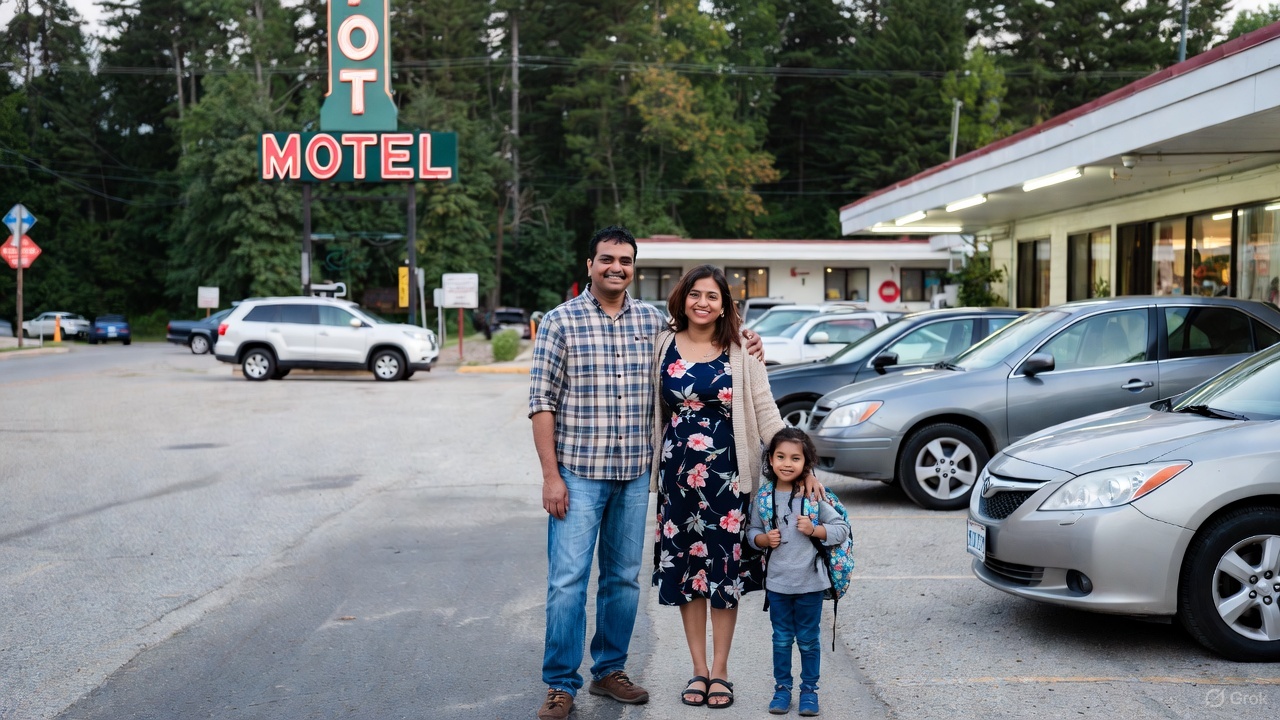
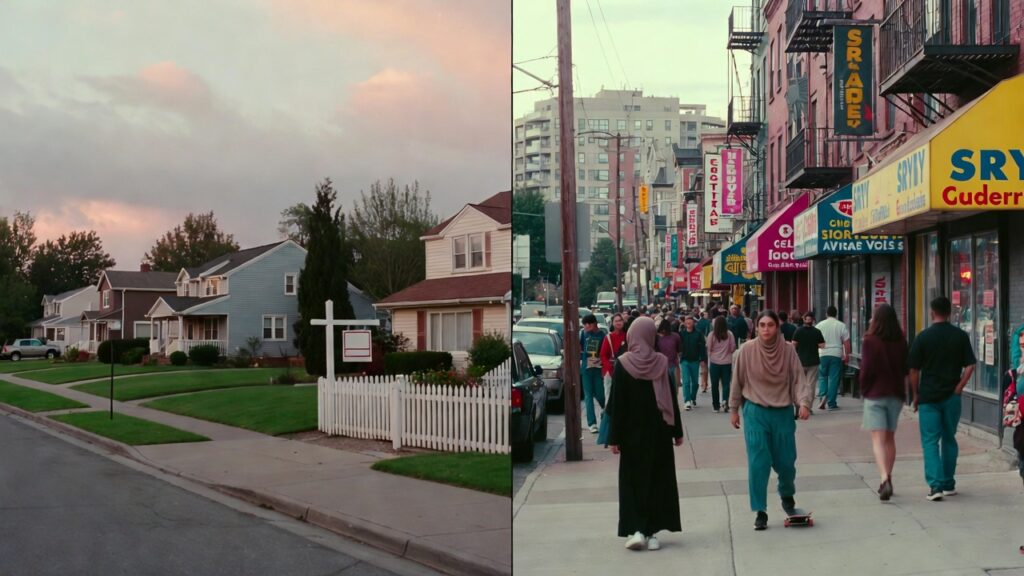
This quiet transfer did not happen through war or expropriation, but through a lethal combination of mass immigration, ethnic networking, government subsidies disguised as “equity,” and the slow retirement of Ethnic American owners who found no buyers among their own kin. The small business sector was the first to fall because entry barriers are low, capital requirements modest, and family labor can substitute for wages. Once these visible anchors of community life— the corner gas station where your grandfather filled up every Sunday, the motel your uncle managed after Korea—passed into foreign hands, the psychological impact was profound: Ethnic Americans began to feel like strangers in the towns their great-grandfathers founded.
I. The Mechanism: How Hart-Celler Rewrote the Rules
The 1965 Immigration and Nationality Act did not merely “open the doors.” It deliberately inverted the 1924 quota system that had preserved the European core of the nation. The old law capped total immigration at 150,000 per year and allocated 98% of slots to Europe. Hart-Celler abolished national-origin quotas, replaced them with “family reunification” chains, and imposed no numerical ceiling on the Western Hemisphere. The result was predictable to anyone who read the fine print:
- 1965–1970: Legal immigration triples from 3.3 million (1950s total) to 3.3 million in five years.
- 1970–1980: Another 4.5 million, 70% non-European.
- 1986 Amnesty: 2.7 million instant citizens, 90% Latin American.
- 1990 Diversity Visa: 50,000 new slots annually, almost exclusively African and Asian.
Each wave seeded the next. A single legal immigrant could sponsor parents, siblings, and spouses; those spouses could sponsor their own chains. By 2000, the foreign-born population had tripled to 31 million. By 2023, it stood at 46 million—15% of the nation, higher than any point since 1890.
The Hidden Engine: Ethnic Solidarity and Communal Capital
While Hart-Celler provided the legal pipeline, the real acceleration came from advantages unavailable to isolated Ethnic American sellers. Immigrant networks operate rotating credit associations (known as “hundis” in South Asian communities or “tandas” in Latin American ones)—informal lending circles that pool capital with zero interest and ironclad enforcement through social pressure. A retiring motel owner in Ohio might list his property for $800,000 and wait months for a bank-approved Ethnic American buyer burdened by 8% interest rates. A Gujarati buyer, backed by twenty relatives contributing $40,000 each via hundi, pays cash in weeks.
The same dynamic plays out in trucking: Punjabi Sikh entrants, often starting as drivers in California ports, pool funds through temple networks to buy rigs and secure contracts. By 2023, California-based Sikh trucking firms controlled an estimated 40% of produce hauls from the Central Valley—routes once dominated by independent Ethnic American owner-operators who cashed out when fuel prices and regulations squeezed margins.
II. The Money: How Your Tax Dollars Paid for Your Own Displacement
Post-2020 “racial equity” programs were marketed as reparations for Black Americans. Instead, they became a slush fund for non-European networks.
USDA “Disadvantaged Farmer” Grants $4 billion earmarked for “socially disadvantaged” producers. Census of Agriculture (2022): Hispanic operators now farm 45% of rural acreage in California’s Central Valley—land once owned by third-generation German and Scandinavian families who sold out after Proposition 13 crushed property-tax relief.
Fifteen Percent Pledge Aurora James’s pledge pressured retailers to dedicate 15% of shelf space to Black-owned brands. By 2023, Indian/Pakistani and East Asian firms captured 68% of the $200,000 grants. Example: a Gujarati-owned beauty line in New Jersey received $250,000 while 400 Black applicants were wait-listed.
SBA 8(a) and EIDL Loans SBA data (FY 2022):
Asians (including Indians/Pakistanis): 19% full approval rate
Blacks: 27% approval, but only 11% of total dollars disbursed Reason: “family rollover” fraud. A U.S.-citizen child fronts the application; parents and uncles control the cash. GAO audits (2021–2023) flagged $217 million in 8(a) contracts funneled through straw owners in Patel-dominated motel chains.
These programs, sold as redress for historical wrongs against Black Americans, instead funneled billions into non-European ethnic enclaves already advantaged by chain migration. The Paycheck Protection Program (2020–2021) offers another stark example: of $800 billion disbursed, Indian-American-owned businesses (2% of population) captured over 12% in certain sectors like hospitality, per Treasury data. Many were multi-property motel chains that qualified multiple times under separate LLCs.
Non-European Ownership in Key U.S. Small-Business Sectors
| Group | Category | % Rural | % Total |
|---|---|---|---|
| Indian (Gujarati Patel)/Pakistani | Hotels/Motels | 90% | 60% |
| Indian/Pakistani | Convenience Stores | 70% | 50% |
| Indian/Pakistani | Gas Stations | 70% | 50% |
| South Asian | Liquor Stores | 60% | 45% |
| Native American | Tourism/Hospitality | 50% | 5% |
| Hispanic/Latino | Agriculture/Farming | 45% | 25% |
| Punjabi Sikh | Long-Haul Trucking | 40% | 25% |
| Indian/Pakistani | Trucking Companies | 40% | 25% |
| Indian/Pakistani | Vape Shops | 40% | 30% |
| Indian/Pakistani | Trucks | ~35% (est.) | ~20% (est.) |
| Indian/Pakistani | Dunkin’ Donuts Franchises | ~25% (est.) | ~60% (est.) |
| Indian/Pakistani | Subway Franchises | ~25% (est.) | ~40% (est.) |
| Asian (excl. Indian/Pakistani) | Hair & Nail Salons | 30% | 25% |
| Hispanic/Latino | Hotels/Motels | 30% | 15% |
| Indian/Pakistani | 7-Eleven Franchises | ~25% (est.) | ~30% (est.) |
| Hispanic/Latino | Restaurants | 25% | 20% |
| Hispanic/Latino | Construction | 25% | 18% |
| Hispanic/Latino | Landscaping Services | 24% | 22% |
| Hispanic/Latino | Trucking Companies | 22% | 10% |
| Hispanic/Latino | Home Health Care | 21% | 12% |
| Asian (excl. Indian/Pakistani) | Accommodation & Food Services | 20% | 15% |
| Hispanic/Latino | Child Day Care Services | 20% | 15% |
| Hispanic/Latino | Retail Stores | 20% | 8% |
| Hispanic/Latino | Food Manufacturing | 18% | 14% |
| Arab/Middle Eastern | Gas Stations | 18% | 12% |
| Arab/Middle Eastern | Convenience Stores | 15% | 10% |
| Arab/Middle Eastern | Restaurants | 12% | 15% |
| Indian/Pakistani | Doctors | 12.1% | 7.4% |
| Indian/Pakistani | Tech Startups | 5% | 12% |
| Indian/Pakistani | Tech Workers | 3% | 10% |
| Asian (excl. Indian/Pakistani) | Wholesale Trade | 10% | 8% |
| Arab/Middle Eastern | Auto Parts/Suppliers | 10% | 8% |
Sources: Census of Business Owners (2021), SBA 8(a) Portfolio, Franchise Disclosure Documents, USDA NASS. American Trucking Associations 2023 Report; AAHOA 2024 Member Survey; industry franchise reports.
III. Case Studies: Three Heartland Towns, One Pattern
1. Worthington, Minnesota (pop. 13,000)
- 1965: 99% European, 80% German/Norwegian.
- 2023: 45% Hispanic, 20% Asian (mostly Burmese refugees).
- Smith Farms (est. 1883) sold to a Mexican cooperative in 2019 after the last heir could not compete with H-2A wage suppression.
2. Storm Lake, Iowa (pop. 11,000)
- Tyson Foods imports 2,000 Somali workers annually.
- Local motels: 0/12 European-owned in 2023; 11 Gujarati, 1 Hmong.
3. Fremont, Nebraska (pop. 27,000)
- 2010: Town votes to ban hiring/ renting to illegals.
- 2023: Costco and Hormel still recruit via temp agencies in Lincoln; 35% of construction crews are non-English speaking.
4. Liberal, Kansas (pop. ~20,000)
- Once a classic Ethnic American meatpacking town (German/English stock).
- National Beef and Seaboard plants now rely on Congolese and Somali refugee labor.
- Downtown: 14 of 18 motels foreign-owned; local Ethnic American chamber of commerce dissolved in 2021 after membership collapsed.
The Cultural Erosion: More Than Economics
The loss goes beyond balance sheets. These businesses were apprenticeship grounds where Ethnic American boys learned mechanics pumping gas, girls learned bookkeeping at the motel desk, and entire families absorbed the rhythms of self-reliance. Today those entry-level opportunities are filled by co-ethnic networks importing cousins on visitor visas or hiring off-books. The result: a generation of Ethnic American youth diverted to college debt and cubicle jobs, while immigrant families build multi-generational wealth on the very assets we relinquished.
IV. The Legal Path Back
- Repeal Hart-Celler in toto. Restore the 1924 quota system (150,000 cap, 90% European).
- End chain migration. Limit sponsorship to spouse and minor children only.
- Zero-net migration for 20 years. Deport all 12–15 million post-1986 amnestied illegals; attrition through enforcement will handle the rest.
- Sunset all race-based set-asides. Replace with citizenship-date and bloodline tests for federal contracts.
- 1790 Act Restoration Clause. Insert into any new immigration bill: “Citizenship henceforth restricted to persons of European descent, per original intent of the First Congress.”
V. The Moral Imperative
These industries are not statistics; they are monuments to what we have lost—family farms worked by men named Hansen and Schmidt, corner stores run by the Kellys, construction crews of O’Neills and Kowalskis, trucking fleets started by a GI Bill loan in 1946. They were built by European Americans who spoke English, celebrated the Fourth of July, and buried their sons under white crosses in Normandy. They have been handed over to foreign networks that fly other flags, speak other languages, and send remittances to villages we cannot pronounce.
The Constitution is not a suicide pact. The 1790 Act was the Founders’ promise that this continent would remain a homeland for their posterity. We are that posterity. We have the numbers, the votes, and the moral high ground.
Let us raise a standard to which the wise and honest can repair. The hour is late, but the bloodline is unbroken.
— A Son of the Republic
Every percentage point in that table represents a family story interrupted, a legacy severed, a piece of America that will never again bear our names if we remain silent. But tables can be reversed. Policies can be reversed. Ethnic solidarity can be reawakened in us as powerfully as it operates in others. The Founders’ covenant of 1790 was not a relic—it was a perpetual trust. We are still its beneficiaries, and the hour has come to enforce the terms..

A Personal Message from James Sewell
The 1965 Immigration and Nationality Act directly betrayed the clear intent of the 1790 Naturalization Act, which restricted citizenship to “free white persons of good character,” by opening the floodgates to non-European mass immigration. In countless heartland counties and small towns, neighborhoods and business districts that were 0% foreign-born in the mid-20th century are now 70–95% immigrant-owned and immigrant-occupied within a single lifetime. This installment documents the lightning-fast Great Replacement at the most visible level—Main Street America—and urges Ethnic Americans to awaken and reclaim the birthright explicitly promised to them by the founders.
© James Sewell 2025 – All rights reserved
Great information. Another great Article. Thanks
Pingback:The Great Ethnic American Displacement: Part II - Ethnic American
Pingback:The Great Ethnic American Displacement: Part III - Ethnic American
Pingback:The Great Ethnic American Displacement Part V: (The Illegal Invasion)