
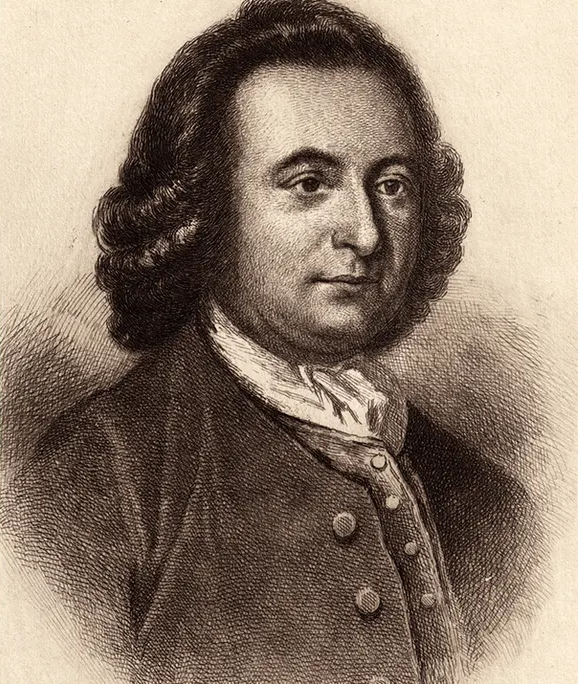
Anti-Federalist Wisdom, George Mason’s Bill of Rights, and a Constitutional Government Advantageous to Ethnic Americans
As we stand in the 250th year since the Declaration of Independence, I write as a direct descendant of George Mason—who refused to sign the Constitution at Philadelphia without explicit protections for the People and the states, I hold the Bill of Rights as sacred and non-negotiable from the founding. The notion of a Constitution without it was repugnant then and remains so. Mason’s insistence helped secure the amendments that made ratification possible. Today, amid claims that “America is too big to be a republic” (citing Montesquieu) and that the Anti-Federalists simply wanted to cling to the Articles of Confederation, we must recover the true debate. These claims distort history and serve the very centralization that has driven the Great American Displacement of our People.
Having issued the Declaration of Ethnic American Independence (Part XXXIX of my series), I position the Ethnic American People—descendants of the Jamestown stock and other founding settlers, the “free White persons of good moral character” under the 1790 Naturalization Act, “ourselves and our Posterity”—as the coherent historical People of this Republic. John Jay in Federalist No. 2 described, “one united people descended from the same ancestors, speaking the same language, professing the same religion, and attached to the same principles. The Preamble secures the Blessings of Liberty to that People and their Posterity”. The central leviathan has betrayed that covenant through demographic engineering, cultural erasure, and expansion beyond enumerated powers. A proper constitutional order, drawing Anti-Federalist warnings into the Federalist framework with Mason’s Bill of Rights fully enforced, would be far more advantageous to Ethnic Americans.
Central to this debate were several key figures whose names may be unfamiliar to many readers today. George Mason of Virginia was a leading delegate at the Constitutional Convention who refused to sign the final document. He insisted that a Bill of Rights — modeled on the one he had written for Virginia — was essential from the beginning. The writer known as Brutus (most likely Melancton Smith of New York) published sixteen powerful essays warning against standing armies, judicial consolidation, and a government too distant from the People. The writer known as Federal Farmer (most likely Elbridge Gerry of Massachusetts) authored a widely read series of letters offering one of the most systematic critiques of representation and the structure of the proposed government. These men were Anti-Federalists who generally accepted the need for a stronger national government but refused to support the Constitution without a Bill of Rights. In contrast, the Federalists (including Alexander Hamilton, James Madison, and John Jay, authors of The Federalist Papers) supported the Constitution as written and initially saw no need for a Bill of Rights, arguing that the document already limited the federal government to enumerated powers and that listing specific rights could be dangerous.
The True Nature of the Debate
The Anti-Federalists did not seek to retain the Articles of Confederation as their end goal. They recognized the Articles’ weaknesses—no reliable revenue, no uniform commerce regulation, a feeble executive for common defense. Their objection was to the particular Constitution proposed: one that risked consolidating power into an aristocracy, eroding state sovereignty, and enabling tyranny through human nature’s corruptible tendencies. They wanted either outright rejection, a second convention, or—most successfully—amendments to restrain the new government.
The Federalists argued that the structure (separation of powers, checks and balances, enumerated powers) plus a Bill of Rights (especially the 9th and 10th Amendments) could rein in federal ambition. The Anti-Federalists countered that men in power would inevitably seek more of it; parchment barriers alone would not hold once ambition, faction, and distance from the People took hold. History has vindicated the Anti-Federalist diagnosis of consolidation far more than the Federalist assurances.
Brutus warned of the scale itself. I do not generally agree but there is something to be said about such a large country being run from Washington.
“If respect is to be paid to the opinion of the greatest and wisest men who have ever thought or wrote on the science of government, we shall be constrained to conclude, that a free republic cannot succeed over a country of such immense extent, containing such a number of inhabitants, and these increasing in such rapid progression as that of the whole United States.”
— Brutus I, New York Journal, October 18, 1787
Points of Agreement with the Anti-Federalists
I agree with the Anti-Federalists on several core dangers that have materialized to the detriment of Ethnic Americans.
Emerging Aristocracy in Congress
They saw that only the richest and most connected could effectively compete on the national stage. Private interests would pave the way, and representatives would vote those interests over their constituents. This remains strikingly relevant today. The middle class—the core of the historic Ethnic American stock—cannot compete financially or socially on the federal level. National politics has become a preserve of wealth, connections, and often interests alien to the founding People.
Brutus and the writer known as Federal Farmer further warned that the proposed House contained too few representatives serving districts far too large. The people would be left with only the shadow of representation, while actual power would rest with a distant elite. Federal Farmer observed that under the proposed system “the people will have but the shadow of representation, and but the shadow of security for their rights and liberties.” This is precisely why middle-class and Ethnic American voices are systematically marginalized in Washington today.
The Senate’s Failure of True Federalism
Despite equal state representation, the original design still fell short. State legislatures did not pay the senators, could not recall them, and voting was by individuals rather than state delegations acting under instructions. Without these controls, senators became insulated from the states that sent them. The inability of states to recall or financially control their senators transferred even more power to the central government. Long tenures—senators serving 30+ years—have entrenched this unaccountability. While six-year terms offer some stability and experience, the absence of recall, state pay, and instructions has proven disadvantageous to the People. Reform is essential: State delegations should send and pay senators; recall mechanisms must be restored; voting should reflect state instructions where vital state interests are at stake. The House of Representatives remains the direct popular branch.
Judiciary as Vehicle of Consolidation
Brutus correctly identified the judicial power as a primary engine of centralization. He objected to Congress’s power to ordain and establish lower federal courts. I agree. The states should hold primary power over their own judiciaries. Judicial supremacy is a farce. The legislature—accountable to the People—should interpret the Constitution in the first instance. Errors by lawmakers can be corrected by the People, but only if their senators are recallable and the system maintains genuine federal character. Strict limits on federal court jurisdiction (Article III) and rejection of general judicial review over state matters are required.
Brutus foresaw exactly this swallowing of state authority:
“The judicial power of the United States is to be vested in a supreme court, and in such inferior courts as Congress may from time to time ordain and establish. The powers of these courts are very extensive… These courts will be, in themselves, totally independent of the states, deriving their authority from the United States, and receiving from them fixed salaries; and in the course of human events it is to be expected, that they will swallow up all the powers of the courts in the respective states.”
— Brutus I, New York Journal, October 18, 1787
The Standing Army Question and a Practical Middle Ground
Brutus and Mason were emphatic on the danger of standing armies in peacetime. Brutus wrote:
“The power to keep up standing armies in time of peace, has been justly objected to this system, as dangerous and improvident… Let us then enquire, whether standing armies in time of peace, would be ever beneficial to our country — or if in some extraordinary cases, they might be necessary; whether it is not true, that they have generally proved a scourge to a country, and destructive of their liberty.”
— Brutus VIII, New York Journal, January 10, 1788
He quoted approvingly the view that standing armies make it “impossible that the liberties of the people in any country can be preserved where a numerous standing army is kept up.” Brutus argued that if such a power must exist at all, “it should if possible be so restricted, as to prevent the ill effect of its operation.”
George Mason was equally blunt at the Virginia Ratifying Convention:
“But when once a standing army is established in any country, the people lose their liberty. When, against a regular and disciplined army, yeomanry are the only defence,—yeomanry, unskilful and unarmed,—what chance is there for preserving freedom? … Recollect the history of most nations of the world. What havoc, desolation, and destruction, have been perpetrated by standing armies!”
— George Mason, Virginia Ratifying Convention, June 14, 1788
In his written Objections to the Constitution (November 22, 1787), Mason listed among the fatal defects: “nor against the danger of standing armies in time of peace.”
I share the concern: large peacetime standing armies have historically been tools of domestic oppression and governmental usurpation. Pure reliance on militia alone, however, leaves a large republic vulnerable in an age of peer competitors, rapid threats, and interests abroad that affect the security and prosperity of the Ethnic American homeland.
The Standing Army Question and a Practical Middle Ground
Brutus and Mason were emphatic about the dangers of standing armies in peacetime. Brutus warned that keeping up such forces “would be in the highest degree dangerous to the liberty and happiness of the community.” George Mason was equally direct, stating that “when once a standing army is established in any country, the people lose their liberty.”
While I share their concern, a large modern republic cannot rely solely on militia for defense against peer competitors or threats to vital interests abroad. A balanced approach is needed.
Supremacy Clause, Necessary and Proper, Taxation, and Proper Interpretation
The Supremacy Clause (and related provisions like the Necessary and Proper Clause) makes federal law supreme within its delegated sphere only. The 10th Amendment reserves everything else to the states or the People. Anti-Federalists feared broad construction would swallow the states; they were right.
Brutus warned that these clauses, taken together, would grant the general government “absolute and uncontrollable power” and inevitably produce complete consolidation of the states into one national government.
The Power of Taxation and the Destruction of State Sovereignty
Brutus further emphasized that the federal taxing power was indefinite and unlimited. He argued it would drain the states of revenue, render them dependent, and destroy their independent existence. This power, combined with the Supremacy Clause, would make state sovereignty illusory. For Ethnic Americans today, federal taxation and spending have become the primary engines of the leviathan—funding demographic replacement, cultural erasure, and policies that override state and local resistance. Strict construction of the taxing power, paired with robust enforcement of the 10th Amendment, is essential to restoring balance as we enter the next 250 years.
How Ethnic Americans should interpret the Constitution:
- Enumerated powers strictly construed; implied powers narrowly limited.
- 10th Amendment as a substantive, judicially enforceable limit on federal overreach.
- Legislature (Congress, with states via a reformed Senate) as primary interpreter of constitutionality; courts advise within narrow bounds.
- Recallable, state-accountable senators + direct House elections restore responsiveness.
- Redress of grievances, petition, remonstrance, and state interposition as legitimate tools when the central authority exceeds its sphere.
- The Bill of Rights, secured through Mason’s stand, protects the retained rights of the Ethnic American People and the states.
George Mason and the Bill of Rights from the Beginning
George Mason opened his written Objections to the Constitution with the foundational defect:
“There is no Declaration of Rights, and the laws of the general government being paramount to the laws and constitution of the several States, the Declarations of Rights in the separate States are no security.”
— George Mason, Objections to the Constitution, November 22, 1787
He also listed the absence of any declaration “against the danger of standing armies in time of peace.” Mason refused to sign because he would not trust future amendments— The Bill of Rights would come 2 years later in 1791. Protections for the People and the states had to be secured from the outset. As his descendant, I share that conviction. The 9th and 10th Amendments must be treated as substantive limits, not afterthoughts. Only then can the Constitution serve the historic Ethnic American People rather than facilitate their displacement in the centuries ahead.
Advantageous to Ethnic Americans
A government structured this way—Federalist union with Anti-Federalist restraints, Mason’s Bill of Rights teeth, restored accountability, limited judiciary, restrained taxation, and a defense-focused military under civilian and state checks—directly serves the Ethnic American People. It counters the aristocracy in national politics that has enabled our displacement. It enforces the original covenant of the 1790 Naturalization Act and the Preamble’s focus on Posterity. It makes the “long train of abuses” catalogued in our Declaration of Ethnic American Independence harder to sustain.
We do not need to scrap the Constitution or retreat to the Articles. We need to reclaim its original understanding, enforce its limits, restore its federal character, and add the accountability mechanisms the Anti-Federalists demanded and Mason helped secure. On this 250th anniversary of 1776, that reclamation is our inheritance and our duty to those who will come after us.
The middle ground exists. The tools are in the founding documents and the debates. It is our duty, as Ethnic Americans, to wield them.

© James Sewell 2026 – All rights reserved
A Personal Note from James
Fellow Ethnic Americans,
As we mark the 250th anniversary of the Declaration of Independence, these words come not from detached observation, but from a sense of living inheritance. George Mason, my 7th great-grandfather, refused to sign the Constitution without explicit safeguards for the rights of the People and the authority of the states. He understood, as Brutus warned, that written promises alone cannot restrain ambition or the natural drive of central power toward consolidation. I have approached these debates not merely as history, but as someone whose ancestors arrived at Jamestown in 1610 and 1619 — free men and women of good character who helped build this Republic for themselves and those who would follow.
The concerns raised by Brutus regarding standing armies, an overreaching judiciary, unchecked taxation, and representation too far removed from the People have proven remarkably durable. Yet I remain convinced that the Constitution, properly understood and strengthened with the accountability measures the Anti-Federalists sought — recallable senators answerable to their states, strict limits on federal power, and a military focused on defense rather than perpetual foreign engagement — still offers the soundest framework for preserving what our forebears secured.
We issued the Declaration of Ethnic American Independence because a long train of abuses has become difficult to ignore. The balanced approach outlined here is not offered as compromise, but as a practical path by which our People can once again exercise meaningful self-governance. The Tenth Amendment must again function as a real limit. The states must again be sovereign in their proper spheres. And those who represent us nationally must once more be accountable to the states and the People who sent them.
This is not a matter of nostalgia. It is a duty — the same duty that led Mason to withhold his signature until rights were secured, and that led so many of our ancestors to pledge their lives, fortunes, and sacred honor in 1776. Deeds, not words.
I remain, as ever, your servant in the cause of our People and our Posterity.
James Sewell