Immigration’s Assault on the Land: Plundering the Resources Our Ancestors Tamed for Foreign Hordes
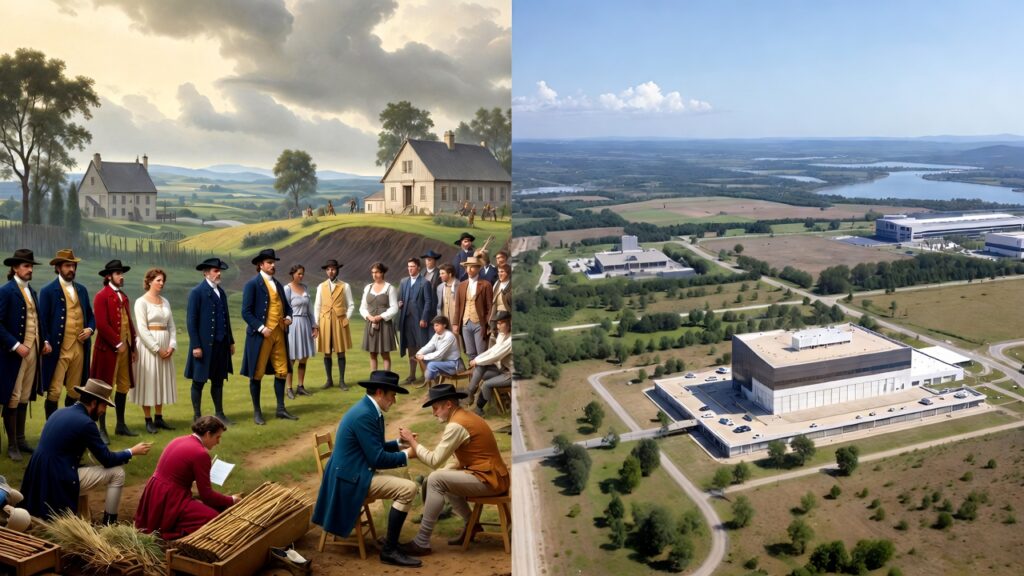
Picture the resolute Ethnic American settlers of the late 1700s—free White persons of good moral character, as defined by the Naturalization Act of 1790—carving homesteads from raw frontier, enduring harsh elements to cultivate soil that would sustain their descendants under the republic’s founding covenant. Fast forward to this betrayal: foreign entities and surging immigrant populations devouring prime acreage, often adjacent to vital military sites, extracting resources without the reciprocity our nation demands, while escalating demands strip the land bare and jeopardize our security.
In this installment, I lay bare the core threat: mass immigration and foreign land acquisitions eroding our ecological heritage, plundering the bounties our forefathers secured for “We the People” and their posterity—all Ethnic Americans, past, present, and future, who align with the 1790 act’s standard of free White persons of good moral character. Whether your roots trace to the Jamestown colonists of the 1600s or later arrivals meeting that criterion, this land is your birthright, not fodder for outsiders. This piece builds on the series by exposing how demographic shifts not only dilute our cultural fabric but ravage the environment, demanding swift reclamation to preserve our republic’s vitality.
The Betrayal of America’s Conservation Covenant: From Theodore Roosevelt’s Vision to Today’s Ecological Plunder
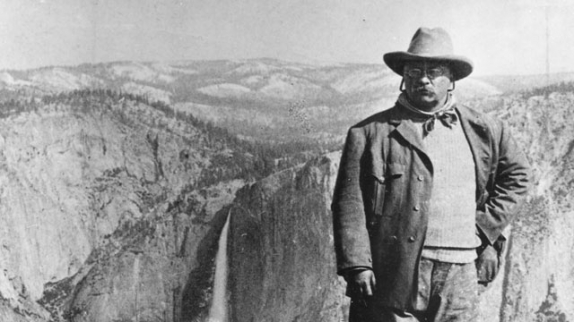
America’s ecological history crystallized in the late 19th and early 20th centuries, when leaders grasped that the nation’s forests, rivers, wildlife, and soils formed a finite trust—not endless plunder but a legacy to safeguard for posterity. This vision reached its zenith under Theodore Roosevelt, the “Conservation President,” who turned stewardship into enduring policy. From his Dakota ranching days witnessing bison and game vanish to reckless overuse, Roosevelt acted decisively from 1901–1909. He founded the United States Forest Service, expanded or created five national parks, designated 18 national monuments (including the Grand Canyon), set aside 150 national forests, and established 51 bird reservations and four game preserves—protecting roughly 230 million acres for future generations.
Roosevelt’s creed was resolute: resources belonged to the American people, to be transferred “increased, and not impaired, in value.” In his 1908 “Conservation as a National Duty” address, he rejected the pioneer myth of inexhaustible land, demanding foresight to secure prosperity for “We the People” and their posterity. To him, conservation bolstered national strength through wise, patriotic use—prioritizing Americans first.
What would Roosevelt say about today’s ecological erasure—foreign entities seizing land near military bases, non-reciprocal ownership by nations barring Americans abroad, and mass immigration fueling farmland conversion, aquifer depletion, and biodiversity loss? He would denounce it as a flagrant betrayal of his covenant. Roosevelt insisted on immigrant assimilation and undivided loyalty—”one flag, one language, one loyalty”—and endorsed restrictions like the 1907 Immigration Act to preserve unity. He would see foreign grabs as assaults on sovereignty, akin to outsiders looting what he fiercely guarded. The export-driven extraction by multinationals, the 2 million acres of annual farmland loss to sprawl, and the resource strains fracturing communities would strike him as reckless abandonment of the foresight he championed.
This modern plunder mocks Roosevelt’s legacy. Where he preserved lands to fortify the republic for Ethnic Americans—free White persons of good moral character under the 1790 standard—he would view current policies as squandering that birthright to foreign hordes and unchecked influxes, depleting rather than enriching the inheritance entrusted to us. It betrays not just ecology, but the patriotic imperative to leave America stronger for those who follow.
The Sacred Soil: Ancestral Legacy Versus Rampant Foreign Seizure
Consider an Ethnic American whose forbearer arrived in the 1600s, establishing farms in Virginia’s Tidewater region through relentless toil, honoring the constitutional pledge to secure liberty for posterity. They conserved the land meticulously, viewing it as an enduring trust. Today, that vision crumbles as foreign powers and multinational corporations claim vast tracts, while hordes of immigrants inflate population pressures, converting arable ground into overcrowded developments.
This outright theft strikes at the heart of our personal lives, robbing families of generational stability and turning cherished homesteads into commodities for outsiders. Imagine waking up to find your family’s century-old farm, where children played and harvests fed communities, now overshadowed by foreign-owned industrial operations that suck the life from the soil. Property taxes skyrocket in immigrant-swollen areas, forcing sales at a loss—taxes that ironically fund welfare and infrastructure for the very newcomers accelerating the displacement. As a side note, these escalating taxes act as a hidden levy, siphoning wealth from Ethnic Americans to subsidize the invasion, leaving heirs with mounting debts instead of thriving legacies.
The impact ripples into daily existence: clean water becomes scarce as foreign mega-farms over-pump aquifers, contaminating wells that once quenched thirst without fear. Local economies falter when small-town grocers shutter, unable to compete with export-driven agriculture that ships our resources abroad, hiking food prices for everyday meals. Families picnic in parks turned to dust bowls, children inherit polluted playgrounds instead of pristine fields, and retirees watch property values plummet as sprawl engulfs neighborhoods, eroding retirement security built on land equity.
The U.S. Department of Agriculture’s (USDA) Foreign Holdings of U.S. Agricultural Land Report reveals foreign holdings at 44,776,078 acres—3.5% of private farmland—up 8.6% from 2022. States like Texas (5.3 million acres) and Maine (3.6 million) bear the brunt, but the personal toll is universal: in rural communities, suicide rates among farmers are 3.5 times higher than the general population, as noted in reports drawing on Centers for Disease Control and Prevention (CDC) data linking economic pressures to mental health crises.
Multinationals, often foreign-controlled, exacerbate depletion through aggressive extraction, salinizing soils and polluting aquifers. Imagine an Ethnic American farmer in Iowa, stewarding 200 acres for over a century, now outbid by a Saudi-linked entity exporting alfalfa, dropping local water tables by 100 feet per analyses in similar arid zones. This theft violates the founders’ intent, handing our posterity’s resources to those with no stake in our covenant. Communities fracture as schools overflow with non-English speakers, diverting funds from conservation education to translation services, leaving our youth disconnected from the land’s history.
On a deeper level, this seizure disrupts family traditions—hunting grounds vanish under subdivisions, fishing spots poison from runoff, and holiday gatherings move indoors as open spaces shrink. The emotional theft is profound: pride in self-sufficiency erodes, replaced by dependency on imported goods, while the sense of belonging fades in towns where foreign influences dominate signage and commerce. This is no abstract policy; it’s a direct assault on the rhythms of American life, from backyard barbecues to quiet evenings under stars unmarred by industrial lights.
The lack of reciprocity amplifies the injustice, as foreign regimes deny Americans equivalent rights while exploiting ours.
The One-Sided Plunder: Foreign Ownership Here, Denial Abroad
Foreign nationals from restrictive nations like China, Saudi Arabia, Canada, the Netherlands, Italy, the United Kingdom, and Germany freely acquire U.S. property, yet bar Americans from theirs—a direct assault on our sovereignty and the sacrifices that tamed this continent. In China, foreigners face 70-year lease limits with approvals rarely granted to U.S. citizens, per a 2024 U.S. State Department Investment Climate Statement: China. Saudi Arabia confines non-GCC foreigners to leases in select areas, no outright ownership, as per the 2024 U.S. State Department Investment Climate Statement: Saudi Arabia.
Canada, despite holding 12,845,209 acres (29.5% of foreign-held land), restricts non-residents from owning more than 10 acres in provinces like British Columbia without special permits. The Netherlands, with 6,596,410 acres, prohibits foreign ownership of agricultural land without EU ties or residency. Italy (2,703,064 acres) mandates government approval for non-EU buyers, often denied. The UK (2,692,001 acres) imposes stamp duties and restrictions on non-residents. Germany (1,875,334 acres) requires residency for farmland purchases.
Yet, USDA’s Foreign Holdings of U.S. Agricultural Land shows Chinese entities holding 349,442 acres, including significant parcels in Texas. Saudi interests control water-intensive farms in Arizona, exporting crops amid domestic shortages. This imbalance enables ecological harm: foreign owners, detached from local accountability, deploy intensive methods that erode soils at 10 times natural rates, per Environmental Protection Agency (EPA) studies on industrial agriculture.
Immigration compounds this: population booms from migrants drive urban sprawl, consuming 2 million farmland acres yearly, according to the American Farmland Trust’s reports. Cities like Los Angeles and Miami transform into non-English-speaking enclaves, where foreign influences dominate, eroding our ethnic core forever. Resources dwindle—California’s aquifers depleted 20% since 2020, U.S. Geological Survey (USGS) data confirms—while safety nets strain, diverting funds from conservation.
This vulnerability peaks when acquisitions hug military assets, endangering national defense.
Strategic Vulnerabilities: Foreign Grabs Near Military Strongholds
All Americans stand to lose their inheritance as adversaries secure land near bases, blending ecological ruin with security threats. In 2025, Chinese-linked purchases near installations like Laughlin Air Force Base in Texas (significant acres nearby) raised alarms, per USDA figures. The MineOne crypto mine near F.E. Warren AFB in Wyoming, ordered divested in 2024 by President Biden, highlighted espionage risks from surveillance-capable operations.
Other examples abound: Fufeng Group’s halted 370-acre buy near Grand Forks AFB in North Dakota, flagged by the Committee on Foreign Investment in the United States (CFIUS) for proximity to drone and space ops. Sun Guangxin’s Texas holdings near Laughlin, tied to Chinese military, prompted state bans. A 2024 Government Accountability Office (GAO) report identifies over 40 million acres potentially at risk, urging expanded CFIUS radii to 100 miles.
Ecologically, these sites suffer contamination; wind farms leach toxins into groundwater, per EPA 2025 assessments. Immigration heightens stakes: swelling populations near bases like San Diego’s naval facilities create non-English zones, fostering foreign enclaves that undermine unity and security. Farmland loss here means lost food sovereignty, with cities becoming alien territories, our ethnicity diluted irreversibly.
The resource drain from immigration further accelerates this crisis.
Strained Resources: Immigration-Fueled Depletion and Loss
Mass immigration from overpopulated regions overwhelms our land’s capacity, hastening depletion our forefathers never envisioned. The Federation for American Immigration Reform (FAIR) studies peg immigration-driven growth at millions yearly, gobbling open space. Water crises ensue—California’s 20% aquifer loss, USGS reports—while deforestation claims 500,000 acres annually to sprawl.
Foreign owners import high-impact farming: over-irrigation salinizes Midwest soils, EPA notes. In Oregon, foreign mega-farms divert streams, eroding topsoil 10-fold. Losing farmland to housing for migrants turns American cities foreign, non-English dominant, erasing our cultural landscape. Safety erodes as resources stretch thin, military readiness compromised by encroaching developments.
To grasp the scale, examine the quantified evidence.
The Poisoned Inheritance: Superfund Sites as Ecological Treason Across the Heartland
Our Ethnic American forebears did not merely settle this continent—they tamed, cultivated, and conserved it as a sacred trust for their blood descendants under the republic’s founding principles. Theodore Roosevelt’s conservation ethic demanded that we leave the land “increased, and not impaired,” yet today vast swaths of America stand as toxic scars: Superfund sites, the most contaminated hazardous waste locations in the nation, where industrial poisons leach into soil, groundwater, and air, threatening the very posterity our ancestors secured.
The Environmental Protection Agency’s Superfund program, born from the 1980 Comprehensive Environmental Response, Compensation, and Liability Act (CERCLA) in response to disasters like Love Canal, has identified thousands of severely polluted sites. As of early 2025, the National Priorities List (NPL) includes around 1,340 active sites requiring long-term cleanup, with New Jersey (over 100 sites), California, Pennsylvania, and others bearing heavy burdens. Broader inventories reveal over 13,000 sites of varying concern, and tens of thousands more potentially contaminated former industrial areas. Millions of Americans live in the shadow of this legacy: approximately 3 million within one mile and about 13 million within three miles (with broader estimates reaching 70+ million within three miles depending on the dataset.
These are not abstract blights. Superfund sites contain heavy metals, volatile organic compounds, PCBs, dioxins, and radioactive residues from factories, landfills, mining, and chemical operations. Exposure links to cancer clusters, respiratory ailments, developmental issues in children, and broader health declines—directly undermining the robust stock of Ethnic Americans who built this nation. Many sites sit in or near rural and suburban communities once thriving on ancestral farmlands, now compromised by runoff that salinizes soils, poisons aquifers, and renders hunting grounds and fishing waters unusable. Property values plummet, family farms face forced sales, and the generational continuity our forebears envisioned erodes under invisible toxins.
This poisoning compounds the foreign seizure and immigration-driven sprawl detailed earlier. Population surges from mass immigration accelerate urban expansion onto or near contaminated zones, while foreign-owned operations and multinationals—often less accountable to local stewardship—exacerbate industrial legacies through intensive extraction. Lax oversight in high-growth areas, strained resources diverted to accommodate newcomers, and the prioritization of short-term economic gains over Roosevelt’s patriotic conservation all intensify the crisis. Sites near military installations or in agricultural heartlands represent a dual betrayal: ecological and strategic. Climate factors like flooding or wildfires further risk mobilizing these toxins, spreading the poison farther across the land our ancestors tamed.
Where Roosevelt set aside millions of acres to fortify the republic for “We the People” and their posterity—free White persons of good moral character per the 1790 Naturalization Act—today’s reality mocks that vision. Superfund sites symbolize a profound failure of sovereignty: allowing unchecked development, foreign influence, and demographic overload to despoil what should have remained a pure inheritance. Reclaiming our ecological heritage demands not only accelerated cleanups but halting the pressures that create new wounds—restricting foreign ownership, curbing immigration-fueled demand, and restoring priority to those with ancestral stake in this covenant. Only then can we honor the resolute settlers of Jamestown and beyond by delivering unpoisoned soil to our descendants.
Quantifying the Theft: Data on Foreign Land Holdings
The figures expose the extent of this invasion. Here’s updated data from key sources.
| Country/Entity | Acres Owned (2023) | % of Total Foreign-Held | Notable Locations Near Bases | Ecological Impact Notes | Source Notes |
|---|---|---|---|---|---|
| Canada | 12,845,209 | 29.5% | Maine (3.6M acres, near naval facilities) | Forest to renewables, habitat loss | USDA AFIDA 2023 Report |
| Netherlands | 6,596,410 | 15.1% | Texas (wind farms near Air Force bases) | Soil erosion from cropping | USDA AFIDA 2023 Report |
| Italy | 2,703,064 | 6.2% | Colorado (near Army sites) | Water overuse in arids | USDA AFIDA 2023 Report |
| United Kingdom | 2,692,001 | 6.2% | Alabama (timber near ports) | Monoculture biodiversity drop | USDA AFIDA 2023 Report |
| Germany | 1,875,334 | 4.3% | Oklahoma (near Tinker AFB) | Chemical runoff | USDA AFIDA 2023 Report |
| China | 349,442 | 0.8% | Texas (near Laughlin AFB); ND (near Grand Forks) | Depletion, security risks | GAO-24-106337 |
Total: 44,776,078 acres, up 8.6% from 2022, fueled by renewables scarring landscapes.
Institutional failures enable this.
Betrayers in Power: Legislative, Judicial, and Institutional Collusion, Coercion, and Cowardice
Our government’s branches collude in this surrender, through lax enforcement, judicial overreach, and bureaucratic inertia, betraying the founding covenant. CFIUS reviews deals but misses gaps; a 2024 GAO audit reveals incomplete data sharing, hindering identification of risks near 100+ bases. USDA’s AFIDA process, last updated 2006, lacks verification, allowing underreporting—GAO recommends audits, yet delays persist.
Legislatively, cowardice abounds: The Farmland Security Act of 2023 boosts penalties to 100% of land value for shell companies, but stalls in committee amid lobbying. States like Texas’s SB 147 bans certain countries, but federal preemption creates loopholes. The Protecting America’s Agricultural Land from Foreign Harm Act targets Iran, North Korea, China, Russia, yet partisan gridlock halts progress.
Judicially, collusion emerges: Florida’s SB 264, restricting Chinese ownership, faced Eleventh Circuit blocks in 2024, prioritizing “rights” over security. Similar rulings in Virginia and California undermine state efforts, coercing compliance with globalist agendas.
Institutions like USDA collude via slow reporting; a 2024 NACo Primer criticizes delays, while reciprocity acts are ignored. Coercion from international pacts, like WTO ties, pressures leniency. Cowardice in enforcement: Despite ANPRM for AFIDA reforms, no binding changes, allowing adversary acres per USDA.
This systemic failure erodes our land, resources, and safety, demanding accountability.
Tying to the Series
This environmental plunder links to prior entries: demographic overwhelm in (Part I) mirrors resource strain; economic drains in (Part V) fuel foreign grabs. Cultural shifts (Part X) parallel ecological ones, both displacing our Ethnic American essence.
Call to Action: Reclaim Our Birthright Now
Support farmland security acts to enforce reporting and penalties. Advocate for reciprocity acts’ 50% tax on non-reciprocal buyers. Expand CFIUS to 100 miles via protecting military installations acts. Boycott foreign-owned goods; form land trusts preserving U.S. holdings. Demand immigration halts to curb sprawl. Vote against enablers; push state bans like Texas’s SB 147 nationwide. Educate communities on risks; petition for USDA audits. Our security and posterity hinge on these steps—mobilize now before irreparable loss. Prioritize Superfund cleanups with full polluter (including foreign) liability and protect ancestral heartlands from further toxic burdens.

© James Sewell 2026 – All rights reserved
A Personal Note from James
Ethnic Americans—descendants of the resolute 1600s pioneers who carved Jamestown and the Tidewater from wilderness, and all later kin who met the 1790 Naturalization Act’s standard of free White persons of good moral character—this continent is our shared birthright, forged in blood, sweat, and unyielding stewardship for our posterity alone.
What our forefathers tamed and conserved, foreign hordes and rootless multinationals now plunder and poison. They seize our farmland, despoil our aquifers, and leave toxic scars across the sacred soil meant for our children’s children. This is not mere policy failure; it is a generational theft of our very inheritance.
Yet we are not helpless. The spirit of our ancestors still burns within us. Rise with urgency. Reclaim our land, enforce reciprocity, halt the invasion, and restore stewardship to those who truly belong. Only then can we secure this republic—not as a transient marketplace for the world, but as the enduring homeland of our people for generations yet unborn.
Yours in unyielding resolve, James Sewell
Pingback:The Ethnic American Library - Ethnic American
Pingback:The Great American Displacement: Part XL – (Conclusion) - Ethnic American